Open Today Sales: 9 AM-7 PMOpen Today Service: 7:30 AM-5 PM
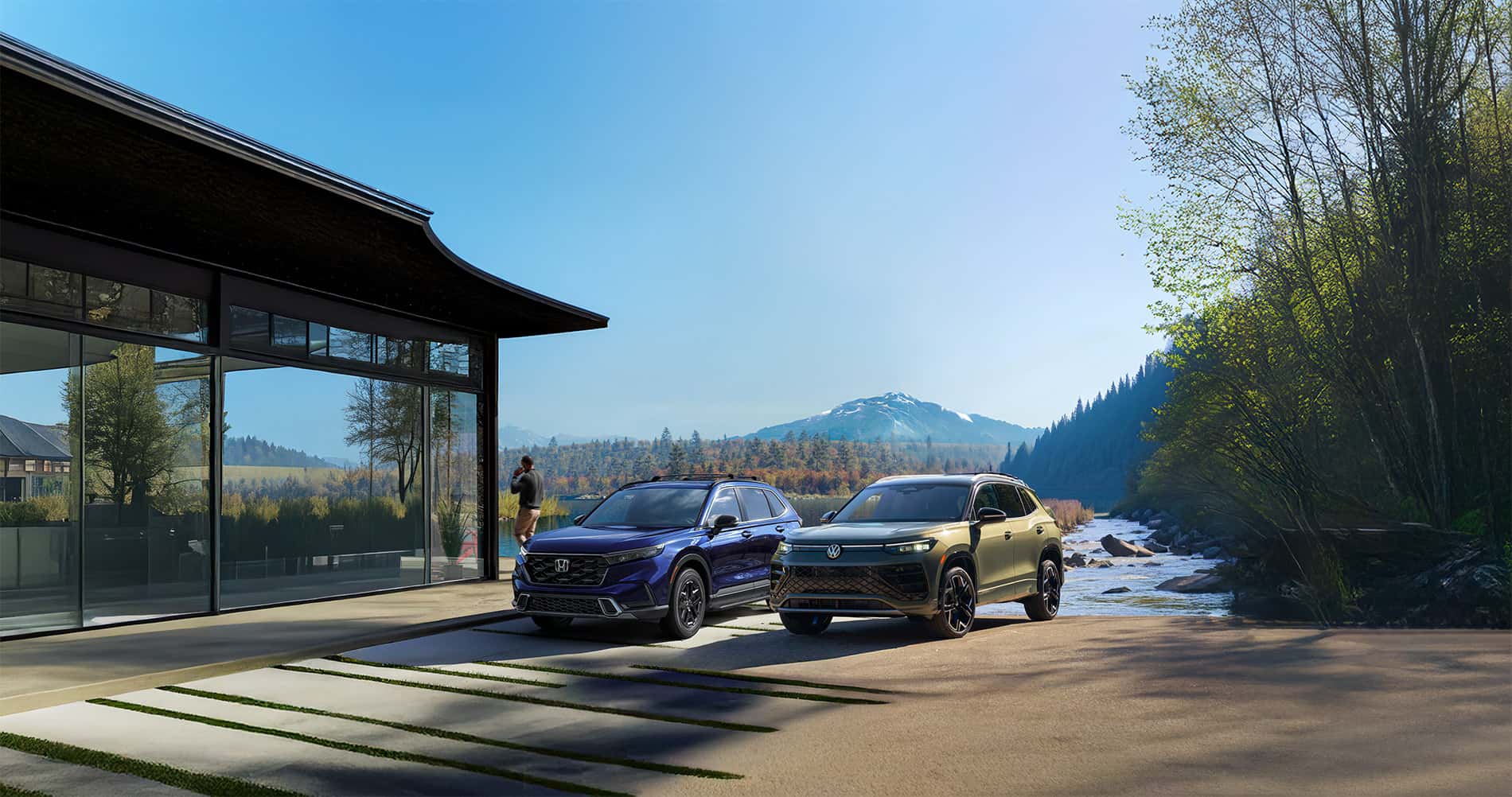
Choosing between two of the most popular compact SUVs on the market often comes down to lifestyle, priorities, and value. That’s why so many shoppers compare the Volkswagen Tiguan vs Honda CR‑V when deciding on their next vehicle. Both models deliver advanced safety, modern technology, and everyday versatility, but they take different approaches to performance, comfort, and efficiency.
The 2025 Volkswagen Tiguan emphasizes premium features, a tech‑forward cabin, and light towing capability, making it a strong choice for drivers in Sacramento, Folsom, and Rocklin who want upscale design without sacrificing practicality. The 2026 Honda CR‑V, meanwhile, leans into hybrid efficiency, family‑friendly cargo space, and Honda’s reputation for reliability—an appealing mix for shoppers in Roseville, Lodi, and across Northern California.
In this guide, we’ll break down similarities, performance, dimensions, interior comfort, technology, safety, and overall lifestyle fit. By the end, you’ll have a clear picture of which SUV best matches your needs, whether you’re looking for premium refinement in the Tiguan or hybrid efficiency in the CR‑V.
| Trim / Model | 2025 Volkswagen Tiguan MSRP* | 2026 Honda CR‑V MSRP** |
|---|---|---|
| Base Model | S FWD – $29,495 S AWD – $30,995 |
LX 2WD – $30,920 LX AWD – $32,420 |
| Mid-Level | SE FWD – $32,295 SE AWD – $33,795 |
EX 2WD – $33,150 EX AWD – $34,650 |
| Premium | SE R-Line Black FWD – $35,455 SE R-Line Black AWD – $36,955 |
EX-L 2WD – $35,400 EX-L AWD – $36,900 |
| Top Trim | SEL R-Line AWD – $40,505 | Sport Touring Hybrid AWD – $42,250 |
When comparing the Volkswagen Tiguan vs Honda CR‑V, both SUVs are closely aligned in pricing, but they emphasize value in different ways. The Tiguan starts slightly lower at $29,495 for the S FWD, while the CR‑V LX begins at $30,920. At the top end, the Tiguan SEL R-Line AWD is priced at $40,505, while the CR‑V Sport Touring Hybrid AWD reaches $42,250.
Standard features also differ. The Tiguan S includes a 12.9-inch central display, Digital Cockpit Pro, IQ.DRIVE® driver assistance, wireless App-Connect, and heated front seats. The CR‑V LX comes standard with Honda Sensing®, a 7-inch touchscreen, Apple CarPlay®/Android Auto™, and LED headlights. As trims progress, the Tiguan emphasizes premium touches like available 15-inch touchscreen, massage front seats, and R-Line styling, while the CR‑V highlights hybrid efficiency, Bose® premium audio, and Google built-in on higher trims.
For shoppers in Sacramento, Folsom, Rocklin, Roseville, and Lodi, the Tiguan delivers strong value with upscale features at each trim level, while the CR‑V appeals to those prioritizing hybrid fuel economy and Honda’s reputation for reliability. Both SUVs provide excellent long-term value, but the choice depends on whether buyers prefer Volkswagen’s tech-forward luxury or Honda’s efficiency-focused practicality.
*2025 Volkswagen Tiguan MSRP excludes $1,425 destination charge.
**2026 Honda CR‑V MSRP excludes $1,450 destination charge.
| Shared Features | 2025 Volkswagen Tiguan | 2026 Honda CR‑V |
|---|---|---|
| Turbocharged 4‑Cylinder Engine | 2.0L TSI (201 hp) | 1.5L Turbo (190 hp) or Hybrid (204 hp) |
| Driver Assistance Suite | IQ.DRIVE® Standard | Honda Sensing® Standard |
| Wireless Smartphone Integration | Wireless App‑Connect | Wireless Apple CarPlay® & Android Auto™ |
| Wi‑Fi Hotspot | Available | Available |
| Warranty / Coverage | Carefree Coverage Included | Honda Limited Warranty |
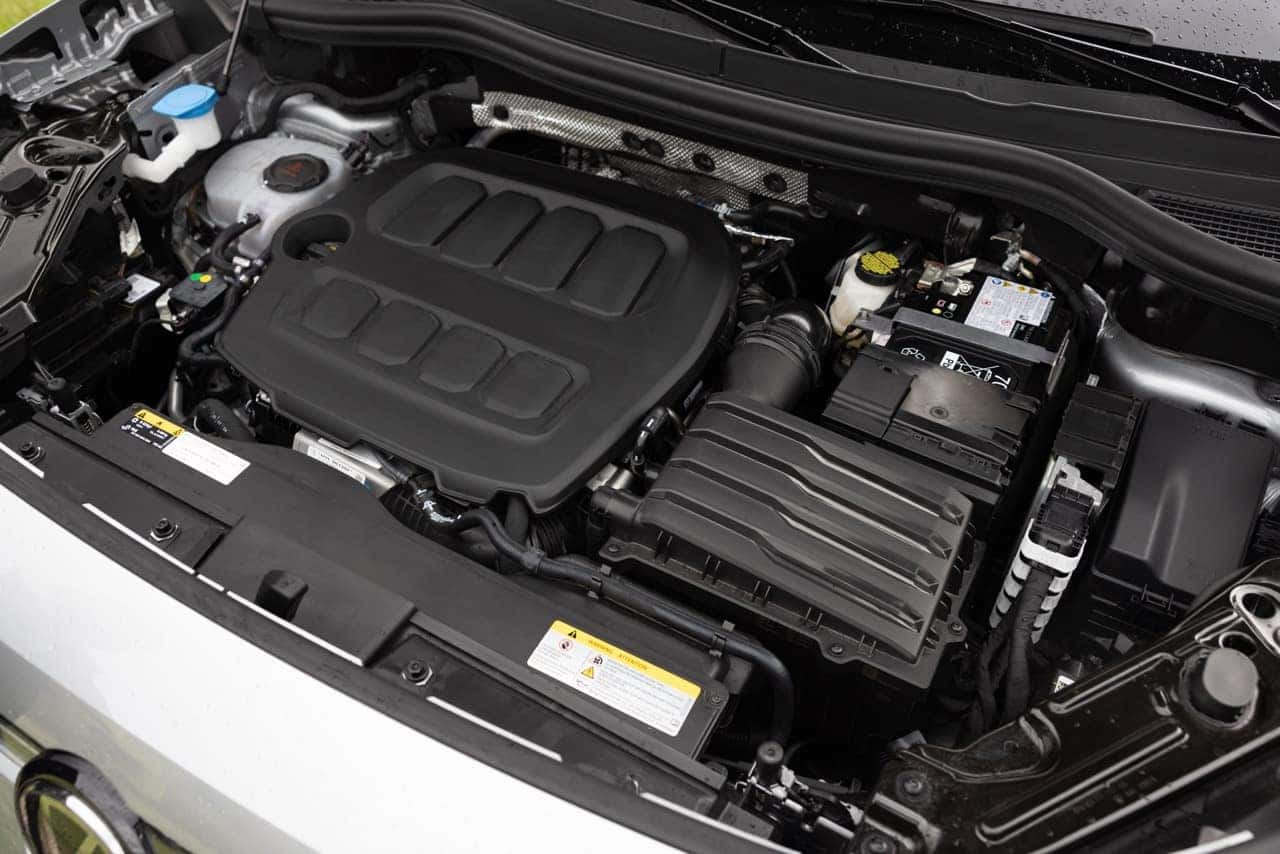
When comparing the Tiguan vs CR‑V, it’s clear that both SUVs share a strong foundation of modern technology, safety, and connectivity. The 2025 Volkswagen Tiguan comes standard with a 2.0L turbocharged TSI engine producing 201 horsepower, while the 2026 Honda CR‑V offers either a 1.5L turbo with 190 horsepower or an available hybrid system with 204 horsepower. This makes the Volkswagen Tiguan vs Honda CR‑V matchup especially appealing for drivers in Sacramento and Folsom who want efficiency without sacrificing performance.
On the safety front, both models include advanced driver assistance suites—IQ.DRIVE® for the Tiguan and Honda Sensing® for the CR‑V—ensuring peace of mind whether commuting through Rocklin or navigating Roseville traffic. Connectivity is also a shared strength, with wireless smartphone integration and available Wi‑Fi hotspots keeping passengers connected on the go.
Warranty coverage is another differentiator. The Tiguan includes Volkswagen’s Carefree Coverage, which bundles scheduled maintenance and added value, while the CR‑V relies on Honda’s traditional limited warranty.
For shoppers in Lodi and across Northern California, these similarities highlight that both SUVs deliver advanced features at competitive price points, but the Tiguan leans toward premium ownership benefits while the CR‑V emphasizes hybrid efficiency.
| Category | 2025 Volkswagen Tiguan | 2026 Honda CR‑V |
|---|---|---|
| Engine | 2.0L Turbocharged TSI | 1.5L Turbo (190 hp) or 2‑Motor Hybrid (204 hp) |
| Horsepower | 201 hp | 190 hp (Turbo) / 204 hp (Hybrid) |
| Torque | 221 lb‑ft | 179 lb‑ft (Turbo) / Hybrid not published |
| Towing Capacity* | 1,500 lbs (FWD) / 1,800 lbs (AWD) | 1,500 lbs (when properly equipped) |
| EPA‑Estimated MPG* | 24 City / 31 Hwy / 27 Combined* | 28 City / 33 Hwy (Turbo) 40 City / 34 Hwy (Hybrid) |
In the Tiguan vs CR‑V matchup, performance and towing reveal two distinct approaches that fit Northern California driving. The 2025 Volkswagen Tiguan’s 2.0L turbocharged TSI delivers 201 hp and 221 lb‑ft of torque, giving confident acceleration for Sacramento commutes and highway merges around Folsom. The 2026 Honda CR‑V counters with a 1.5L turbo (190 hp, 179 lb‑ft) or an available 2‑motor hybrid (204 hp), appealing to shoppers in Rocklin and Roseville who prioritize efficiency without losing responsiveness.
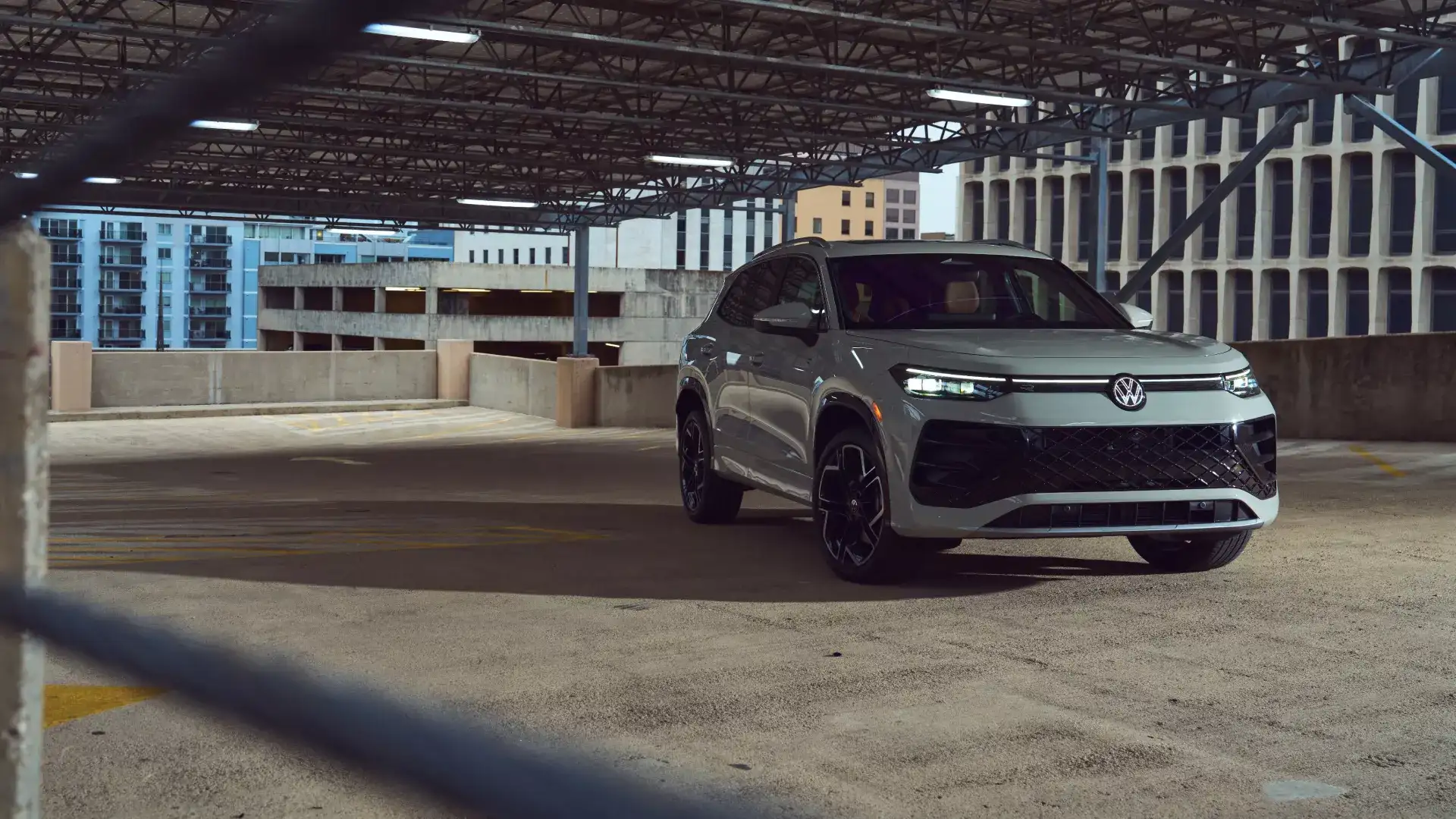
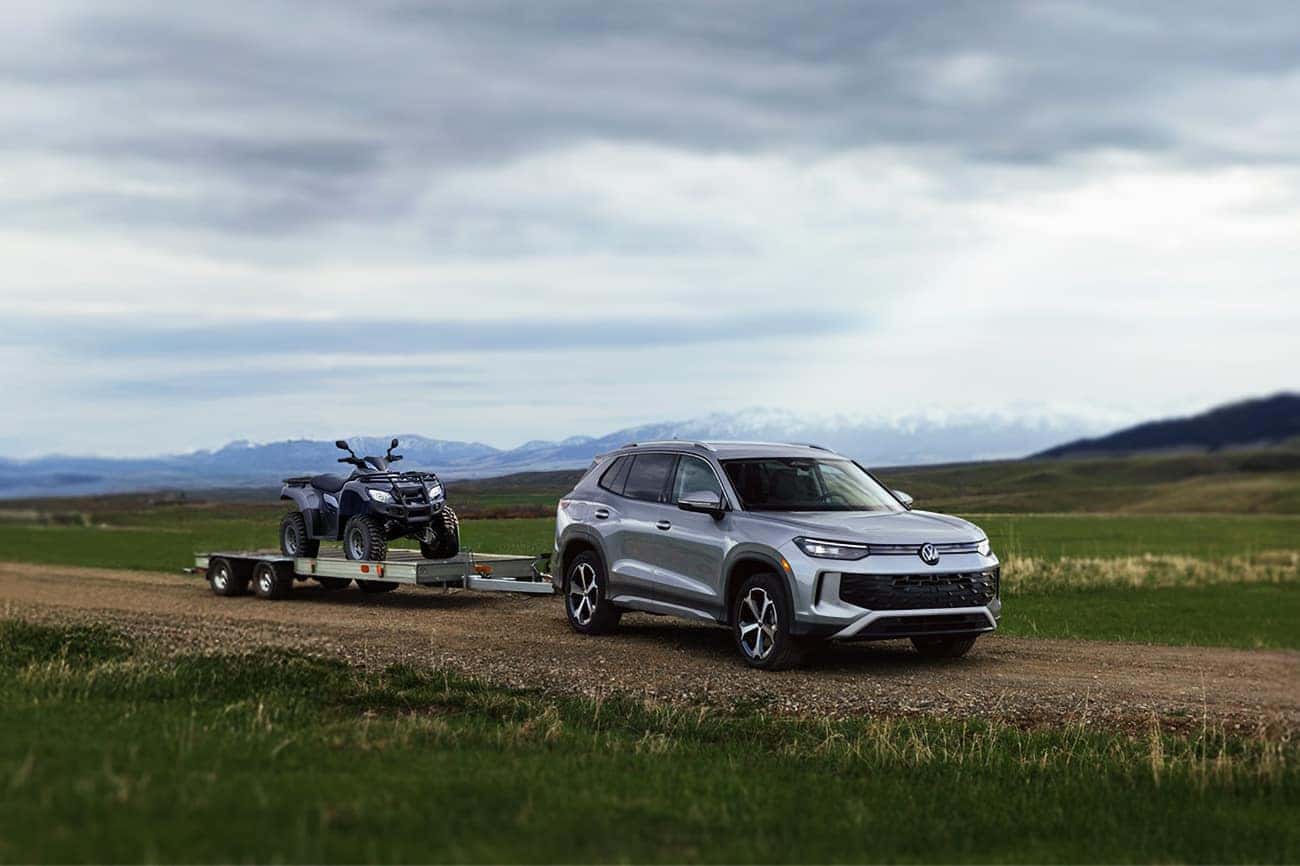
Towing capacity is close, but the Tiguan adds flexibility: up to 1,500 lbs with FWD and 1,800 lbs with AWD—handy for light trailers or weekend gear runs from Lodi to the foothills. The CR‑V is rated up to 1,500 lbs when properly equipped, making it suitable for small cargo but less adaptable than the Tiguan’s AWD setup for towing.
Fuel economy tilts toward the Honda, especially in hybrid form (up to 40 mpg city), ideal for stop‑and‑go routes across greater Sacramento. The Tiguan’s 27 mpg combined balances efficiency with stronger torque, which drivers often feel in real‑world climbs and passes.
For shoppers comparing the Volkswagen Tiguan vs Honda CR‑V, it comes down to priorities: torque and light‑towing confidence (Tiguan) versus best‑in‑class hybrid efficiency (CR‑V).
| Exterior Dimensions | 2025 Volkswagen Tiguan | 2026 Honda CR‑V |
|---|---|---|
| Length | 184.4 in | 184.8 in |
| Width | 73.0 in | 73.5 in |
| Height | 66.1–66.5 in (FWD/AWD) | 66.2 in |
| Wheelbase | 109.9 in | 106.3 in |
| Ground Clearance | 6.6 in (FWD) / 7.0 in (AWD) | 7.8 in (AWD) |
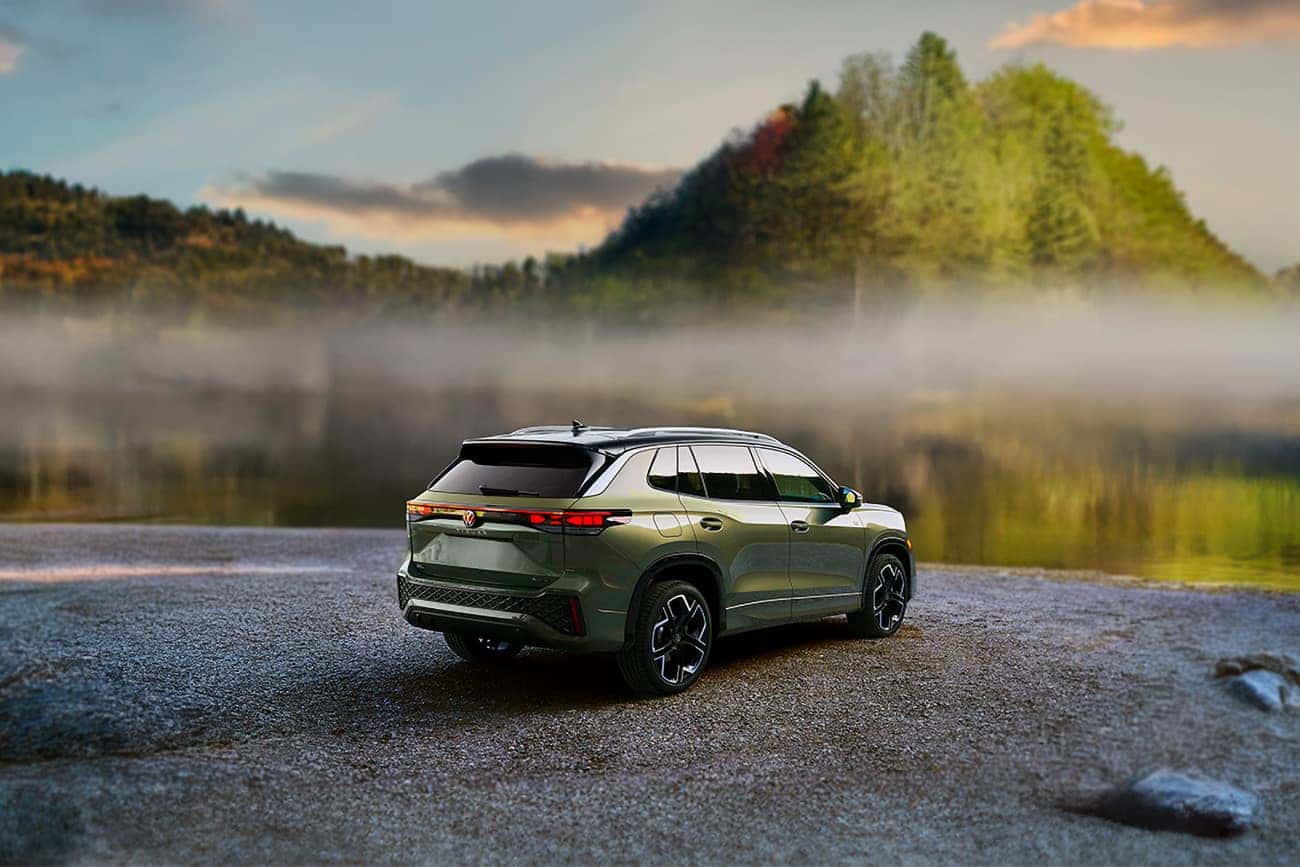
In the Tiguan vs CR‑V comparison, exterior dimensions show two compact SUVs that are nearly identical in footprint yet tuned for different priorities around Sacramento. The 2025 Volkswagen Tiguan measures 184.4 inches long and 73.0 inches wide, with a taller profile (66.1–66.5 inches) and a longer wheelbase at 109.9 inches. That extended wheelbase helps deliver a planted highway feel on I‑5 and extra interior packaging flexibility for families in Folsom.
The 2026 Honda CR‑V is just a touch longer and wider (184.8 inches, 73.5 inches) with a 66.2‑inch height and a shorter 106.3‑inch wheelbase. Where the CR‑V separates itself is ground clearance: 7.8 inches on AWD models, giving shoppers in Rocklin and Roseville a bit more confidence over uneven driveways, snow days, or light gravel roads without moving into a full off‑road class.
Practically speaking, the Volkswagen Tiguan vs Honda CR‑V sizing keeps both models easy to park and maneuver across Northern California. The Tiguan’s longer wheelbase favors ride comfort and interior legroom feel, while the CR‑V’s higher clearance suits adventurers heading north from Lodi for weekend trails.
Shoppers should choose based on daily terrain: smoother suburban routes and freeway stability lean Tiguan; mixed surfaces and mild elevation changes lean CR‑V.
| Category | 2025 Volkswagen Tiguan | 2026 Honda CR‑V |
|---|---|---|
| Seating Capacity | 5 | 5 |
| Passenger Volume | 103.8 cu ft | 103.5 cu ft |
| Cargo Capacity (Max) | 73.4 cu ft | 76.5 cu ft |
| Interior Highlights | Diamond‑Stitched Seating Available Available 10‑Point Massage Front Seats Available 15‑Inch Touchscreen Heated & Ventilated Front Seats |
Leather‑Trimmed Seating (EX‑L & above) Available Bose® Premium Audio 10.2‑Inch Digital Cluster Heated Seats & Steering Wheel One‑Touch Power Moonroof |
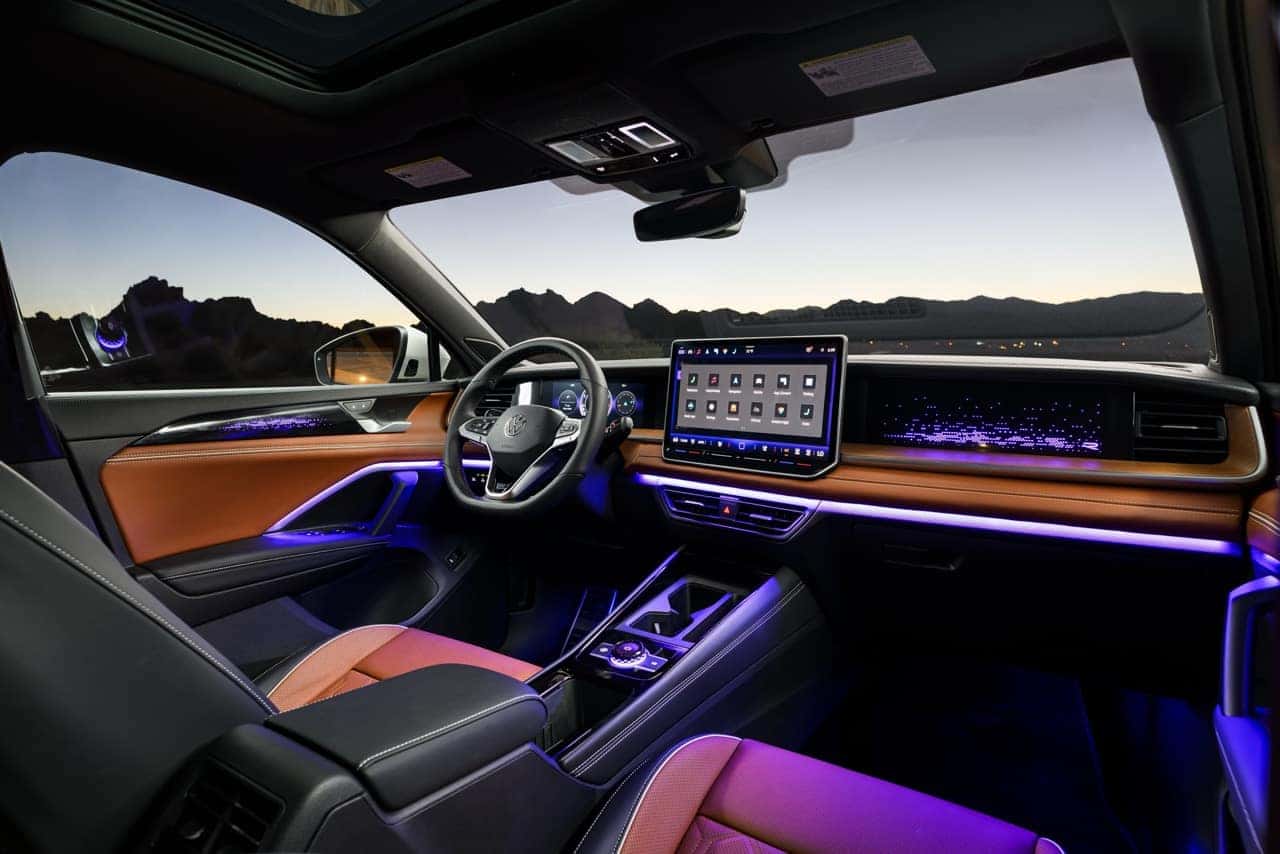
Comfort and cabin tech in the Tiguan vs CR‑V matchup are tightly matched, with both seating five and offering nearly identical passenger volume (Tiguan 103.8 cu ft; CR‑V 103.5 cu ft). The 2025 Volkswagen Tiguan leans into premium touches—available diamond‑stitched seating, heated and ventilated fronts, and an optional 10‑point massage for long drives from Sacramento to Folsom. Its available 15‑inch touchscreen pairs with Digital Cockpit Pro for a modern, streamlined interface that feels upscale and intuitive.
The 2026 Honda CR‑V counters with practical comfort: leather‑trimmed seating on EX‑L and above, a heated steering wheel, and one‑touch power moonroof that’s great for sunny Rocklin and Roseville afternoons. Audiophiles will appreciate the available Bose® premium system, while the 10.2‑inch digital cluster delivers crisp clarity without overwhelming the dash.
Cargo favors the CR‑V (76.5 cu ft) over the Tiguan (73.4 cu ft), but the Volkswagen Tiguan vs Honda CR‑Vdecision ultimately hinges on your priorities across Northern California.
Choose the Tiguan if you value a tech‑forward cockpit and spa‑like front‑seat comfort; pick the CR‑V for slightly more cargo flexibility and everyday creature comforts that shine on weekend runs out from Lodi.
| Category | 2025 Volkswagen Tiguan | 2026 Honda CR‑V |
|---|---|---|
| Driver Assistance | IQ.DRIVE® Standard | Honda Sensing® Standard |
| Digital Displays | 12‑Inch Digital Display Available 15‑Inch Touchscreen |
10.2‑Inch Digital Cluster 9‑Inch Touchscreen (Standard) Google Built‑In (Sport Touring Hybrid) |
| Connectivity | Wireless App‑Connect Available Wi‑Fi Hotspot |
Wireless Apple CarPlay® & Android Auto™ Wireless Phone Charger HondaLink® Connected Services |
| Airbags | 10 Standard Airbags | Advanced Airbag System |
| Warranty / Coverage | Carefree Coverage Included | Honda Limited Warranty |
When evaluating the Tiguan vs CR‑V in terms of technology and safety, both SUVs deliver a strong suite of standard features designed for peace of mind across Northern California. The 2025 Volkswagen Tiguan equips IQ.DRIVE® driver assistance as standard, while the 2026 Honda CR‑V matches with Honda Sensing®. These systems provide adaptive cruise control, lane‑keeping support, and forward collision mitigation—ideal for busy commutes through Sacramento and Folsom.
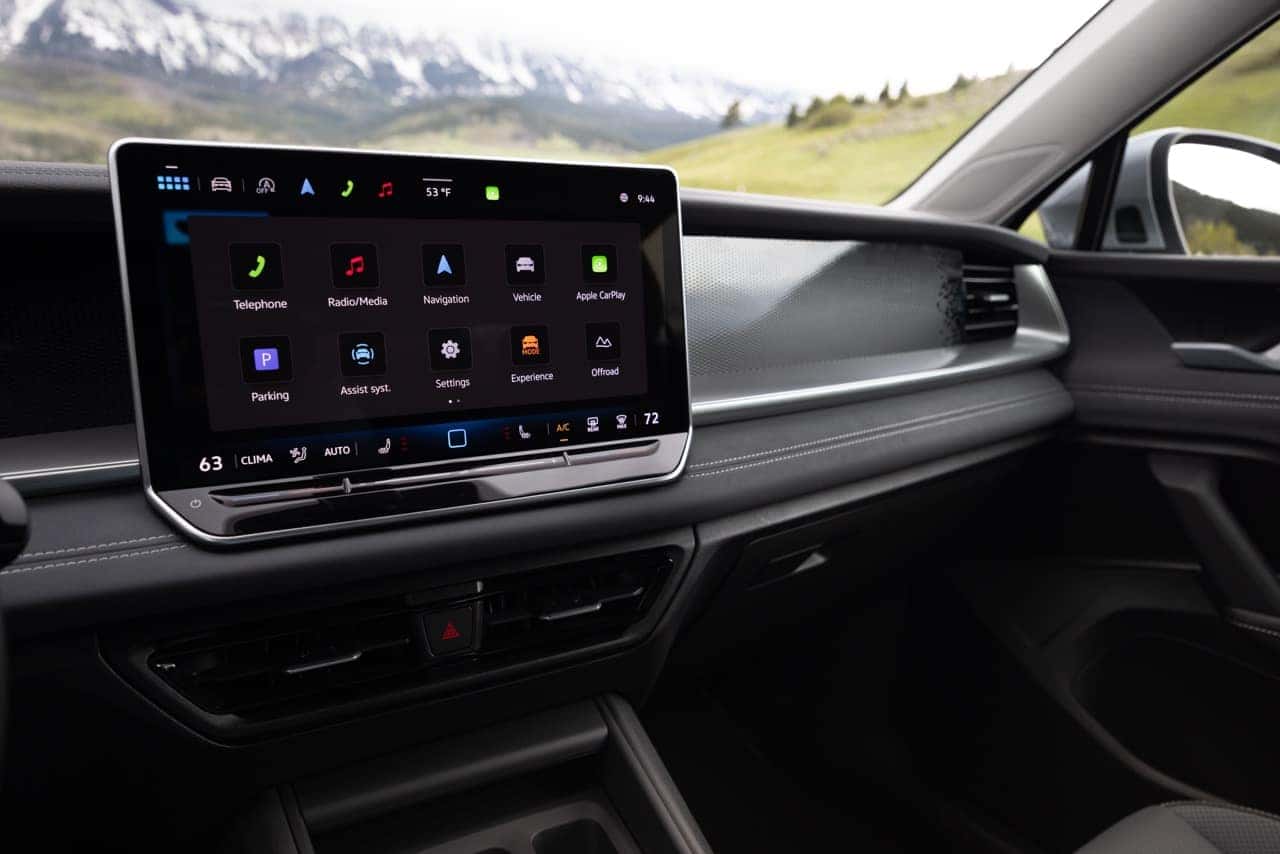
Digital displays highlight another key difference. The Tiguan offers a 12‑inch digital cockpit with an available 15‑inch touchscreen, creating a modern, premium feel for drivers in Rocklin and Roseville. The CR‑V counters with a 10.2‑inch digital cluster, a standard 9‑inch touchscreen, and Google Built‑In on the Sport Touring Hybrid, appealing to tech‑savvy shoppers who want seamless integration.
Connectivity is strong on both sides: the Tiguan provides Wireless App‑Connect and an available Wi‑Fi hotspot, while the CR‑V adds wireless phone charging and HondaLink® services. Safety is reinforced with 10 standard airbags in the Tiguan and Honda’s advanced airbag system in the CR‑V. Warranty coverage is another differentiator—Volkswagen includes Carefree Coverage with scheduled maintenance, while Honda offers its traditional limited warranty.
For shoppers comparing the Volkswagen Tiguan vs Honda CR‑V, the choice comes down to whether premium in‑cabin tech and ownership perks (Tiguan) or integrated Google features and hybrid options (CR‑V) matter most.
| Category | 2025 Volkswagen Tiguan | 2026 Honda CR‑V |
|---|---|---|
| Best Fit For | Couples or small families Urban & suburban drivers needing maneuverability Shoppers wanting premium features at a lower price point Drivers who value efficiency & tech‑forward design with light towing |
Families wanting a balance of efficiency & space Drivers seeking hybrid fuel economy (up to 40 mpg city) Adventurers needing higher ground clearance & AWD confidence Shoppers who want Honda’s reputation for reliability |
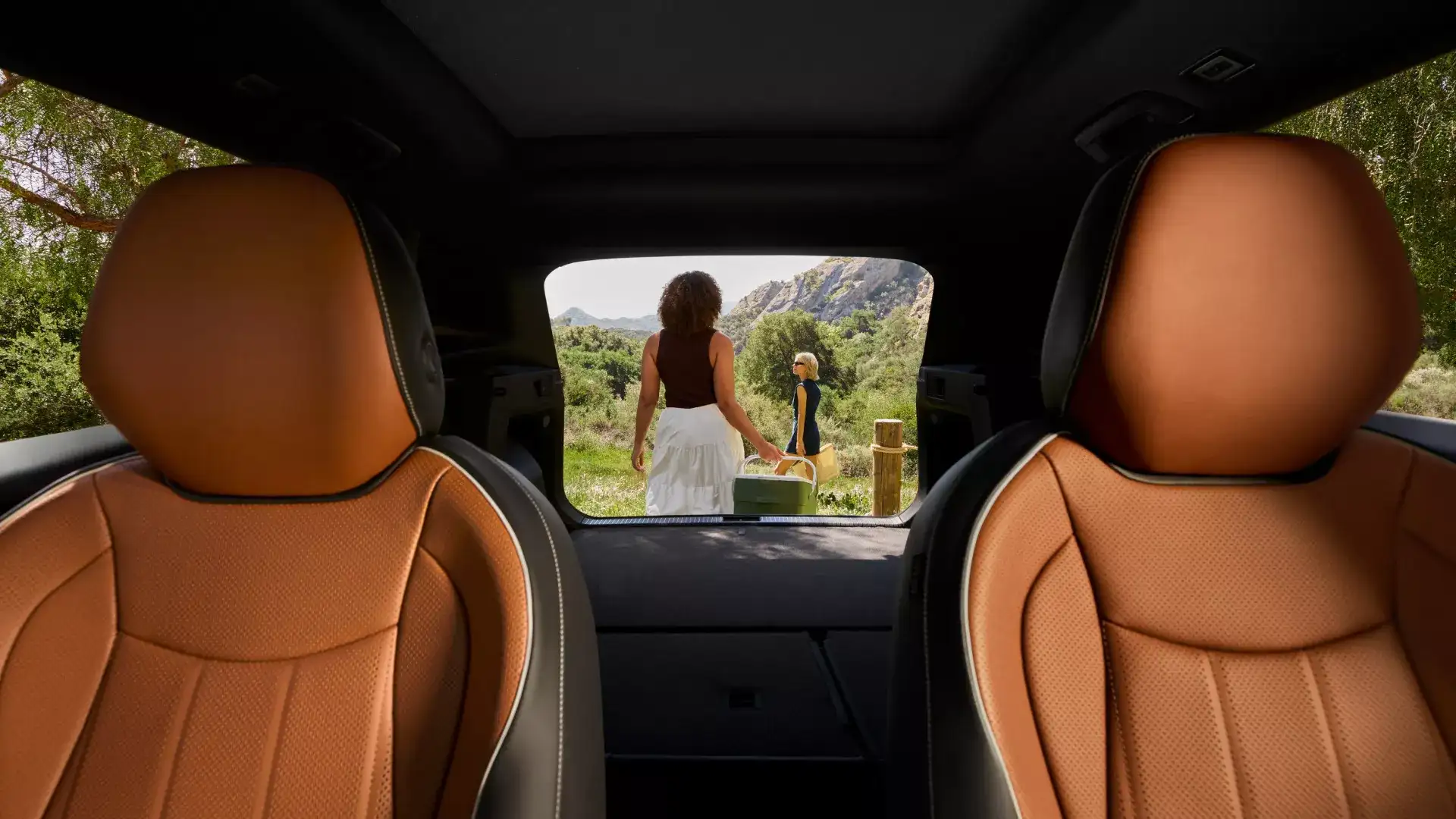
When it comes to lifestyle fit, the Tiguan vs CR‑V comparison highlights how each SUV appeals to different types of Northern California drivers. The 2025 Volkswagen Tiguan is an excellent match for couples or small families in Sacramento and Folsom who want a maneuverable SUV with premium features at a more approachable price point. With its tech‑forward design, upscale interior options, and light towing capability, the Tiguan is ideal for urban and suburban living while still offering flexibility for weekend getaways.
The 2026 Honda CR‑V, on the other hand, is better suited for families in Rocklin, Roseville, and Lodi who need a balance of space and efficiency. Its available hybrid powertrain delivers up to 40 mpg city, making it a strong choice for commuters and eco‑conscious shoppers. With higher ground clearance and AWD confidence, the CR‑V also appeals to adventurers who want to explore beyond paved roads while maintaining Honda’s reputation for reliability.
Ultimately, the Volkswagen Tiguan vs Honda CR‑V decision comes down to lifestyle priorities. The Tiguan emphasizes modern tech, comfort, and value, while the CR‑V leans toward fuel efficiency, versatility, and rugged practicality. Both SUVs deliver strong everyday usability, but the right choice depends on whether your focus is premium features and maneuverability or hybrid efficiency and family‑friendly space.
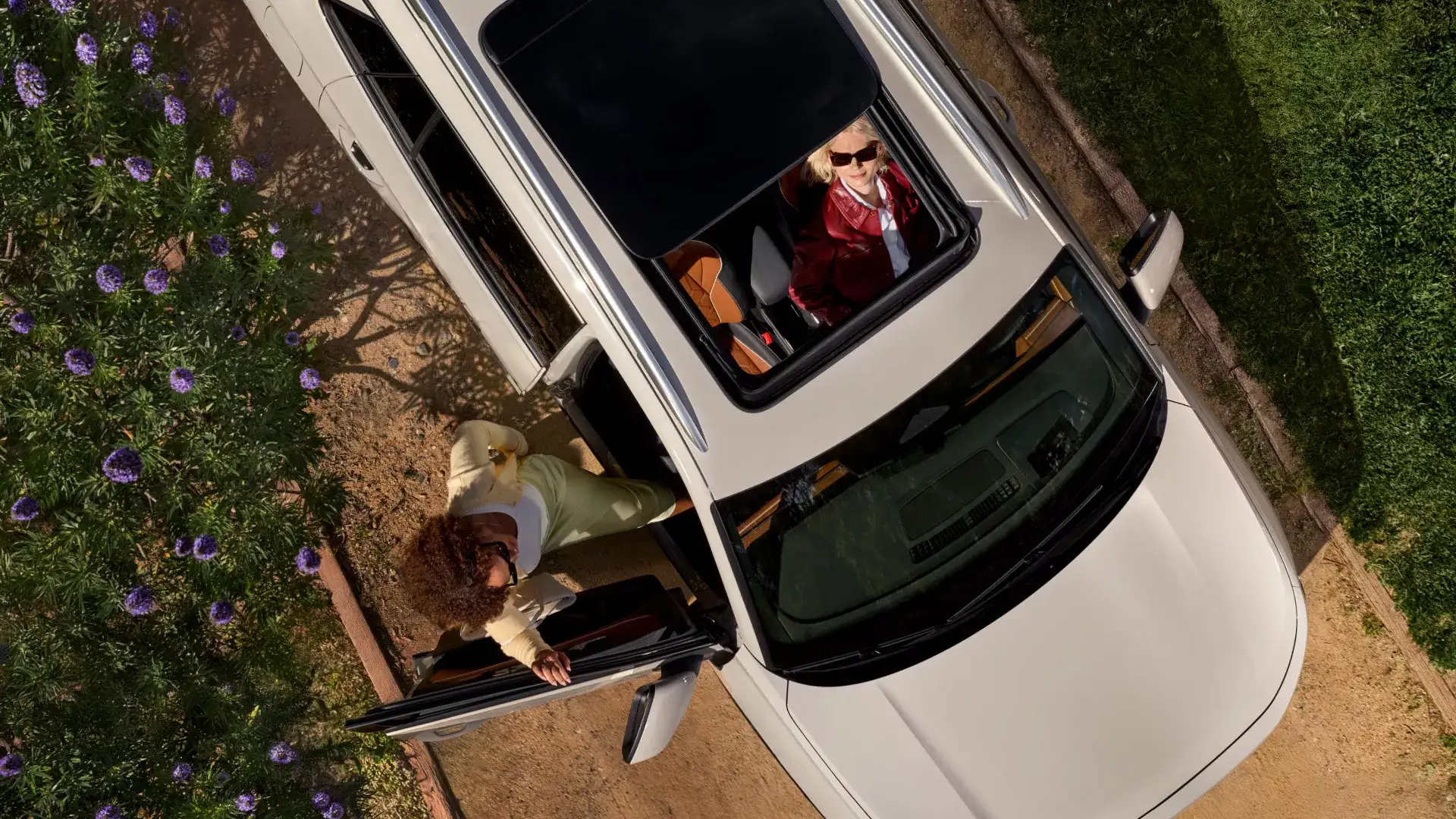
After comparing the Volkswagen Tiguan vs Honda CR‑V across performance, dimensions, comfort, technology, and lifestyle fit, it’s clear that both SUVs deliver strong value for Northern California drivers. The Honda CR‑V stands out with its available hybrid efficiency and slightly larger cargo space, making it a practical option for families focused on fuel savings.
However, the 2025 Volkswagen Tiguan ultimately emerges as the more attractive choice for shoppers who want a premium driving experience at a competitive price. With its stronger torque, available 15‑inch touchscreen, upscale interior options like diamond‑stitched seating and massage front seats, and added towing flexibility, the Tiguan blends refinement with real‑world versatility. Volkswagen’s Carefree Coverage, which includes scheduled maintenance, further enhances long‑term value—something the CR‑V does not match.
For drivers in Sacramento, Folsom, Rocklin, Roseville, and Lodi, the Tiguan offers a tech‑forward cabin, confident performance, and ownership perks that make it stand out in this competitive segment. If you’re seeking an SUV that balances everyday practicality with premium comfort and advanced features, the Tiguan is the smarter choice.
At Elk Grove Volkswagen, we’re proud to serve drivers from Sacramento, Folsom, Rocklin, Roseville, Lodi, and beyond with a full lineup of new and pre‑owned Volkswagen vehicles. Whether you’re comparing the Volkswagen Tiguan vs Honda CR‑V or exploring other models in the VW family, our team is here to help you find the perfect fit for your lifestyle.
From expert financing guidance to certified Volkswagen service, Elk Grove Volkswagen is your trusted partner for every step of the ownership journey. Visit us today and experience the difference of shopping with a dealership that puts your needs first.
DISCALIMERS:
*EPA estimates. Your mileage will vary and depends on several factors, including driving habits and vehicle condition.
*Towing capacity when properly equipped. See owner’s manual for details. Towing may be limited by vehicle payload, accessories, and passenger/cargo load.
*MSRP excludes destination, taxes, title, other options, and dealer charges. Dealer sets actual price.
*Carefree Coverage includes scheduled maintenance for 2 years or 20,000 miles, whichever occurs first, Roadside Assistance for 3 years or 36,000 miles, and a New Vehicle Limited Warranty for 4 years or 50,000 miles. See dealer or vw.com for complete details.
*Driver assistance features are not substitutes for attentive driving. See Owner’s Manual for further details and limitations.


