Open Today Sales: 9 AM-7 PMOpen Today Service: 7:30 AM-5 PM

Comparing the 2026 Volkswagen Taos and the 2026 Volkswagen Tiguan means looking at two SUVs built from the same engineering philosophy, yet designed for very different kinds of drivers. One prioritizes efficiency and maneuverability, while the other leans into space, strength, and refinement. This guide brings those differences into focus with a clean, organized breakdown that makes it easy to see which model fits your lifestyle.
Inside this full 2026 Volkswagen Taos vs Tiguan comparison, you’ll find a detailed look at every category that matters to real shoppers:
Each section includes quick‑analysis highlights for fast takeaways, along with deeper insights that explain what the numbers mean in everyday driving. By the end, you’ll have a clear, data‑driven understanding of how the Taos and Tiguan differ — and which one aligns best with your needs, priorities, and driving habits.
Car & Driver Rating 8.5 / 10
Airy and attractive interior, plenty of cargo space around back, handsome styling.
The 2026 Volkswagen Taos is designed for drivers who want the practicality of an SUV without the bulk.
Its turbocharged 1.5‑liter engine delivers smooth, efficient performance, making it especially appealing for commuters and city‑focused shoppers.
Inside, the Taos feels smartly packaged, offering a clean layout, intuitive controls, and available upgrades like a larger digital cockpit and premium navigation.
Despite its compact footprint, the cabin provides impressive headroom and a flexible cargo area that adapts easily to daily errands or weekend plans.
Comfort features such as heated seats, dual‑zone climate control, and wireless connectivity help the Taos punch above its weight, while its available 4MOTION all‑wheel drive adds confidence in changing weather.
For shoppers who want value, efficiency, and modern tech in a smaller SUV, the Taos delivers a well‑rounded, easy‑to‑live‑with experience.
Car & Driver Rating 9.0 / 10
More fun to drive than most of its rivals, strong optional turbo engine, plenty of space for passengers and cargo.
The 2026 Volkswagen Tiguan steps up with a more substantial feel, offering stronger performance, a larger cabin, and a premium‑leaning design that appeals to families and long‑distance drivers.
Its turbocharged 2.0‑liter engines provide confident acceleration and a composed ride.
Inside, the Tiguan showcases Volkswagen’s latest technology, highlighted by a 12.9‑inch touchscreen, advanced digital displays, and upscale materials throughout the cabin.
Available features like heated rear seats, 30‑color ambient lighting, and power‑adjustable seating elevate comfort for both driver and passengers.
The Tiguan’s generous cargo space and balanced second‑row legroom make it especially versatile, while available 4MOTION all‑wheel drive enhances stability on highways and uneven roads.
For shoppers seeking a refined, spacious SUV with modern amenities and strong everyday capability, the Tiguan stands out as the more premium choice in the lineup.
| Trim Category | 2026 VW Taos MSRP* |
2026 VW Tiguan MSRP* |
|---|---|---|
| Starting Trims |
S FWD $26,500
S 4MOTION $28,200 |
S FWD $30,805
S 4MOTION $32,305 |
| Mid Trims |
SE FWD $29,260
SE 4MOTION $30,960 |
SE FWD $33,605
SE 4MOTION $35,105 |
| Upper Mid Trims |
SE Black FWD $31,510
SE Black 4MOTION $33,210 |
SE R-Line Black FWD $37,245
SE R-Line Black 4MOTION $38,745 |
| Top Trims | SEL 4MOTION $35,900 | SEL R-Line Turbo 4MOTION $43,085 |
QUICK ANALYSIS
↳ The Taos appeals to shoppers who want lower pricing and a simple, value‑focused lineup, while the Tiguan offers a more premium progression with trims that scale toward refinement and performance.
The pricing breakdown makes it easy to see how the VW Taos vs Tiguan comparison plays out for real shoppers across Elk Grove, Sacramento, and the wider Northern California region. The Taos clearly positions itself as the more budget‑friendly option, with every trim level coming in several thousand dollars below its Tiguan counterpart. For drivers in places like Folsom or Rocklin who want an affordable entry point into the Volkswagen lineup, the Taos S starting in the mid‑$26K range is a meaningful advantage.
Moving up the ladder, the gap between the Volkswagen Taos vs Tiguan widens even more. Mid‑level SE trims show nearly a $4,000 difference, which can easily influence monthly payments or allow buyers to step into higher equipment without stretching their budget. This is especially relevant for commuters balancing cost and comfort, since both models offer similar tech and safety foundations at these levels.
Where the Volkswagen Tiguan vs Volkswagen Taos specs really diverge is at the top end. The Tiguan’s SEL R‑Line Turbo sits over $43K, reflecting its stronger performance, larger size, and premium features. Meanwhile, the Taos SEL stays under $36K, appealing to shoppers who want an upscale feel without the midsize‑SUV price tag.
Overall, the pricing structure highlights two distinct paths: the Taos delivers value and efficiency, while the Tiguan caters to buyers who want more space, power, and refinement.
| Specification | 2026 VW Taos | 2026 VW Tiguan |
|---|---|---|
| Engine | 1.5L TSI Turbo I4 |
2.0L TSI Turbo I4 2.0L Evo5 Turbo I4 SEL R‑Line Turbo |
| Horsepower | 158 Horsepower |
201 Horsepower
268 Horsepower SEL R‑Line Turbo |
| Torque | 184 lb‑ft |
207 lb‑ft FWD
221 lb‑ft 4MOTION 258 lb‑ft SEL R‑Line Turbo |
| Transmission | 8‑Speed Automatic w/ Tiptronic® | 8‑Speed Automatic |
| Drivetrain | FWD or 4MOTION AWD | FWD or 4MOTION AWD |
| Max FWD MPG* | 28 City / 36 Highway MPG | 26 City / 34 Highway MPG |
| Max AWD MPG* | 25 City / 32 Highway MPG | 22 City / 29 Highway MPG |
| Fuel Type | Regular Unleaded | Regular Unleaded |
| Max Towing Capacity* | Not Rated for Towing | 1,500 lbs FWD 1,800 lbs 4MOTION |
QUICK ANALYSIS
↳ The Taos prioritizes efficiency and light, easy driving, while the Tiguan delivers noticeably stronger acceleration and towing capability — making the choice a balance between fuel savings and power.
The performance comparison in this VW Taos vs Tiguan breakdown highlights two very different personalities within the Volkswagen lineup. The Taos leans into efficiency and everyday drivability, offering a 1.5‑liter turbo engine that delivers solid fuel economy—especially appealing for commuters traveling between places like Elk Grove and Sacramento. Its lighter footprint and higher MPG make it a smart match for drivers who prioritize low running costs over raw power.
The Tiguan, on the other hand, steps confidently into the role of the stronger, more capable SUV. Even its standard 2.0‑liter turbo engine produces significantly more horsepower and torque than the Taos, giving it a more responsive feel on highways and hilly routes around Folsom or Rocklin. The available 268‑horsepower Evo5 engine in the SEL R‑Line Turbo trim pushes the Tiguan into an entirely different performance class, offering acceleration and towing strength the Taos simply isn’t designed to match.
Fuel economy is another practical divider in the Volkswagen Taos vs Tiguan comparison. The Taos delivers noticeably better MPG in both FWD and AWD configurations, which can make a real difference for Northern California drivers who rack up miles across Roseville, Lodi, and surrounding areas.
Overall, the VW Tiguan vs Taos performance story comes down to priorities: efficiency and agility versus strength and capability.
| Exterior Dimension | 2026 VW Taos | 2026 VW Tiguan |
|---|---|---|
| Wheelbase | 105.9 in | 109.9 in |
| Overall Length | 175.9 in | 184.4 in |
| Body Width Without Mirrors | 72.5 in | 73.0 in |
| Overall Width With Mirrors | 82.6 in | 84.7 in |
| Overall Height | 64.5 in | 66.5 in |
| Ground Clearance | 6.5 in | 7.0 in |
QUICK ANALYSIS
↳ The Taos is more compact and maneuverable for tight city streets, while the Tiguan’s longer wheelbase and wider stance create a more planted, confident feel on highways and uneven roads.
The exterior measurements in this VW Taos vs Tiguan comparison highlight how differently these two SUVs fit into everyday life across Northern California. The Taos is clearly the more compact option, with a shorter overall length and a slightly narrower body. For drivers navigating tighter parking areas in places like Midtown Sacramento or older neighborhoods in Lodi, that smaller footprint can make daily driving feel easier and more relaxed.
The Tiguan, meanwhile, stretches nearly nine inches longer and offers a wider stance. That added size translates into a more planted feel on the highway and typically more interior room, which many families in Roseville or Rocklin appreciate on longer trips. Its taller height and greater ground clearance also give it a bit more confidence on uneven roads or when heading up toward foothill areas.
Even the mirror‑to‑mirror width shows a meaningful difference: the Tiguan is over two inches wider, which contributes to its more substantial road presence. In contrast, the Taos remains city‑friendly without feeling cramped.
These distinctions help shoppers decide which model aligns better with their daily routines—whether that’s squeezing into downtown parking structures or wanting the extra stability and space that come with a larger SUV.
| Interior Dimension | 2026 VW Taos | 2026 VW Tiguan |
|---|---|---|
| Rows of Seating | 2 Rows | 2 Rows |
| Passenger Capacity | 5 Passengers | 5 Passengers |
| Passenger Volume | 99.5 cu ft | 100.4 cu ft |
| Headroom Row 1 / Row 2 |
40.7 / 39.8 in | 39.5 / 39.7 in |
| Legroom Row 1 / Row 2 |
40.1 / 37.9 in | 40.2 / 40.2 in |
| Shoulder Room Row 1 / Row 2 |
56.5 / 55.2 in | 57.0 / 55.7 in |
| Hip Room Row 1 / Row 2 |
53.9 / 45.4 in | 54.5 / 53.3 in |
| Cargo Space Behind Row 2 |
27.9 cu ft FWD 24.9 cu ft 4MOTION |
33.8 cu ft |
| Max Cargo Row 2 Folded |
65.9 cu ft FWD 60.2 cu ft 4MOTION |
69.8 cu ft |
QUICK ANALYSIS
↳ The Taos maximizes space for its smaller footprint, but the Tiguan offers more balanced legroom and greater cargo capacity, giving families and frequent travelers extra flexibility.
The interior measurements in this VW Taos vs Tiguan comparison show how closely matched these two SUVs are in everyday usability, yet they still serve slightly different needs for drivers across Northern California. Both models seat five and offer generous headroom, but the Taos actually provides a touch more space up front, which can make it feel surprisingly open for a compact SUV—something commuters in Elk Grove or Sacramento will appreciate during longer drives.
Where the Volkswagen Taos vs Tiguan size differences start to matter is in rear‑seat comfort and cargo flexibility. The Tiguan’s nearly identical legroom in both rows gives passengers a more balanced experience, especially for families in Roseville or Rocklin who regularly fill the back seats. The Taos, while still roomy, offers a bit less rear legroom and hip room, reflecting its smaller footprint.
Cargo capacity is another practical divider. The Tiguan’s larger body translates into more space behind the second row and a higher maximum cargo volume when the seats are folded. For shoppers comparing Volkswagen Tiguan vs Volkswagen Taos specs, this extra room can make a noticeable difference for weekend trips, sports gear, or Costco runs around Folsom or Lodi.
Overall, the Taos delivers impressive space efficiency for its size, while the Tiguan offers the comfort and cargo room expected from a larger SUV—helping shoppers decide which model best fits their daily routines.
Note: Not all features listed are standard equipped – some features may be optional or available through packages or certain trim levels
| Feature Category | 2026 VW Taos | 2026 VW Tiguan |
|---|---|---|
| Infotainment |
• 8″ Touchscreen or 10.25″ Discover Media Navigation |
• 12.9″ Touchscreen |
| Gauge Cluster |
• 8″ Digital Cockpit or 10.25″ Digital Cockpit Pro |
• 10.25″ Digital Cockpit Pro • Head-Up Display |
| Connectivity |
• Wireless Apple CarPlay • Wireless Android Auto • Dual USB‑C Data Ports • Rear USB‑C Charging Port • myVW Connected Services |
• Wireless Apple CarPlay • Wireless Android Auto • Multiple USB‑C Ports • myVW Connected Services |
| Audio |
• Standard Audio System • Multiple Speaker Configurations |
• Premium Audio System • Multiple Speaker Configurations |
| Comfort |
• Heated Front Seats • Ventilated Front Seats • Heated Steering Wheel • Dual‑Zone Climate Control |
• Heated Front Seats • Ventilated Front Seats • Heated Rear Seats • Heated Steering Wheel • Dual‑Zone Climate Control |
| Convenience |
• Wireless Charging Pad • 10‑Color Ambient Interior Lighting • Panoramic Sunroof • Keyless Access • Remote Start |
• Wireless Charging Pad • 30‑Color Ambient Interior Lighting • Power Front Seats with Memory • Panoramic Sunroof • Cargo Underfloor Storage • Hands‑Free Power Liftgate |
| Exterior Tech |
• LED Headlights & DRLs • Adaptive Front Lighting • Heated Side Mirrors • Black Exterior Accents |
• LED Headlights & DRLs • Adaptive Front Lighting • Illuminated Grille & Logos • Power‑Folding Mirrors with Puddle Lights |
QUICK ANALYSIS
↳ The Taos delivers modern essentials with optional upgrades, while the Tiguan elevates the experience with larger screens, richer lighting, and more premium comfort features throughout the lineup.
The amenities and technology comparison in this VW Taos vs Tiguan table shows how each SUV is tailored to a different kind of daily experience, especially for drivers across places like Sacramento, Roseville, and Folsom. The Taos focuses on delivering the essentials with a modern feel, offering features like wireless smartphone integration, dual‑zone climate control, and available upgrades such as a panoramic sunroof or the larger Discover Media navigation system. It’s a setup that works well for commuters or smaller households who want convenience without stepping into a larger vehicle.
The Tiguan, meanwhile, leans into a more premium direction. Its standard 12.9‑inch touchscreen and available head‑up display create a more upscale cockpit, and the 30‑color ambient lighting adds a level of personalization the Taos can’t match. Comfort features like heated rear seats and power‑adjustable front seats with memory also make a difference for families or anyone who frequently carries passengers.
When comparing Volkswagen Taos vs Tiguan size and equipment, the Tiguan’s added space pairs naturally with its richer feature set, while the Taos keeps things efficient and approachable. For shoppers in Northern California weighing practicality against luxury, this breakdown helps clarify which model aligns better with their lifestyle.
Note: Not all features listed are standard equipped – some features may be optional or available through packages or certain trim levels.
| Safety & Driver Assistance | 2026 VW Taos | 2026 VW Tiguan |
|---|---|---|
| Forward Collision Prevention |
• Front Assist • Automatic Emergency Braking • Pedestrian Monitoring |
• Front Assist • Automatic Emergency Braking • Pedestrian & Cyclist Monitoring |
| Adaptive Cruise Control | Adaptive Cruise Control with Stop & Go | Adaptive Cruise Control with Stop & Go |
| Lane Support |
• Lane Assist • Lane Keeping System • Emergency Assist |
• Lane Assist • Lane Keeping System • Emergency Assist |
| Blind Spot Monitoring | Active Blind Spot Monitor | Active Side Assist |
| Rear Cross‑Traffic Alerts | Rear Traffic Alert | Rear Traffic Alert |
| Parking Assistance |
• Park Distance Control • Rear View Camera • No 360° Camera Available |
• Park Distance Control • Park Assist Plus • Area View (Overhead Camera) |
| Semi‑Autonomous Driving | Travel Assist (Hands‑On Assisted Driving) | Travel Assist (Hands‑On Assisted Driving) |
| Traffic Sign Recognition | Not Available | Dynamic Road Sign Display |
| Lighting Safety Systems |
• LED Headlights & DRLs • Adaptive Front Lighting • Automatic Headlights • Light Assist (High Beam Control) |
• Adaptive Front Lighting • Poor Weather Lights • Automatic Headlights • Light Assist (High Beam Control) |
| Airbags |
• Front, Side & Curtain Airbags • No Front Center Airbag Listed |
• Advanced Airbag Protection System • 10 Airbags Including Rear Side & Front Center |
| Additional Safety Systems |
• Tire Pressure Monitoring System • Hill Hold Control • Hill Descent Control |
• Tire Pressure Monitoring System • Hill Hold Control • Hill Descent Control |
QUICK ANALYSIS
↳ Both SUVs include strong core safety systems, but the Tiguan adds more advanced visibility tools and broader airbag coverage, giving it an edge for shoppers who prioritize maximum driver assistance.
The safety comparison in this VW Taos vs Tiguan breakdown highlights how both SUVs deliver strong everyday protection, but the Tiguan ultimately offers a more advanced suite of features. For many drivers in Sacramento, Roseville, or nearby Northern California areas, these differences can play a meaningful role in choosing the right fit for their lifestyle.
Both models come standard with core Volkswagen systems like Front Assist, Automatic Emergency Braking, and Lane Assist, which help reduce the risk of common collisions and provide extra confidence in busy traffic. This shared foundation means even the more affordable Taos gives shoppers solid peace of mind.
Where the Volkswagen Taos vs Tiguan comparison starts to separate is in the depth of available technology. The Tiguan adds cyclist detection, a more sophisticated blind‑spot system, and the option for Area View — a full 360‑degree camera that makes parking in tight spaces around Elk Grove or Folsom much easier. The Taos offers helpful tools like Park Distance Control and a rearview camera, but it doesn’t include a surround‑view option.
Airbag coverage is another notable distinction. The Tiguan includes a front‑center airbag and additional rear‑side airbags, giving it an edge for families who prioritize maximum occupant protection.
Overall, the VW Tiguan vs Taos safety story comes down to capability: the Taos covers the essentials well, while the Tiguan layers on more advanced systems for drivers who want the highest level of assistance and awareness.
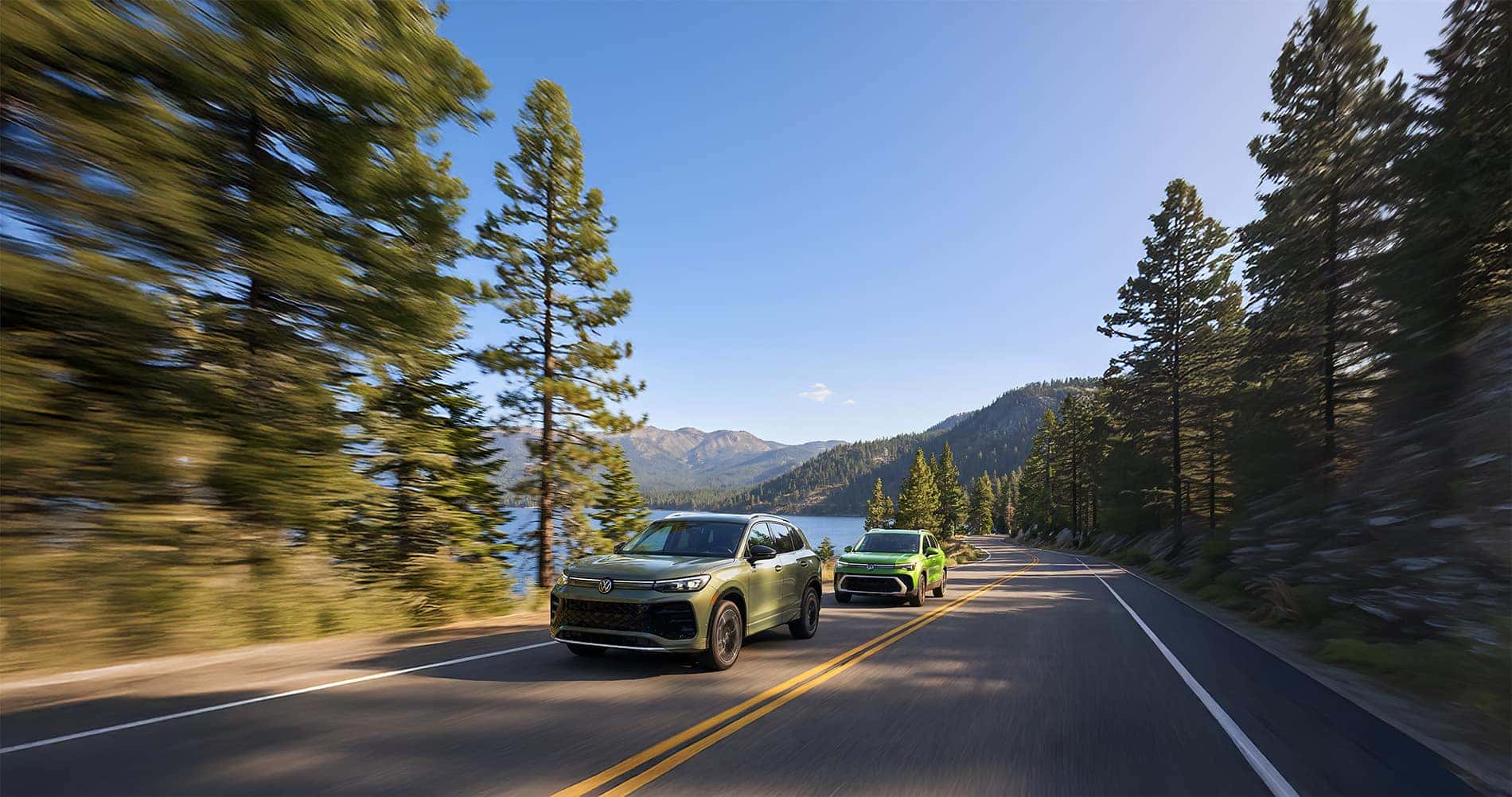
Deciding between the 2026 Volkswagen Taos and the 2026 Volkswagen Tiguan comes down to understanding which SUV aligns more naturally with your everyday rhythm. Throughout this VW Taos vs Tiguan comparison, each model shows off its own strengths — one centered on efficiency and simplicity, the other on space, confidence, and refinement.
• The 2026 Volkswagen Taos is ideal for drivers who want a compact SUV that’s easy to maneuver, budget‑friendly, and packed with the modern essentials needed for commuting around Sacramento, Elk Grove, or Lodi.
• The 2026 Volkswagen Tiguan steps up with a roomier cabin, stronger performance, and a more premium feature set, making it a great match for families and travelers throughout Roseville, Folsom, Rocklin, and nearby Northern California communities.
Both SUVs deliver the everyday practicality and safety that shoppers expect when comparing Volkswagen Taos vs Tiguan size, comfort, and capability. The Taos shines for those who value efficiency and a smaller footprint, while the Tiguan appeals to drivers who want extra versatility and a more upscale feel.
With the key differences laid out, the next step is experiencing how each model feels on the road. A test drive will quickly reveal which Volkswagen SUV best fits your driving style, comfort preferences, and long‑term plans.
At Elk Grove Volkswagen, we believe choosing your next SUV should feel exciting—not overwhelming. That’s why our team is dedicated to creating an experience built on clarity, comfort, and genuine support from the moment you arrive. We’re proud to serve drivers throughout the greater Sacramento region with a welcoming environment and a commitment to doing right by every guest who walks through our doors.
Our showroom features one of the most diverse selections of new Volkswagen models in Northern California, including the latest Taos and Tiguan trims. Whether you’re comparing features, narrowing down your must‑haves, or simply exploring what’s new, our staff is here to offer guidance without pressure. We take the time to understand your needs so you can make a confident, informed decision.
What truly defines Elk Grove Volkswagen is our dedication to long‑term care. From expert service technicians to a knowledgeable parts and accessories team, we’re here to support you well beyond the purchase. Your ownership journey matters to us, and we work hard to ensure you always have a trusted partner close to home.
If you’re looking for a dealership that values transparency, expertise, and a personalized approach, you’ll feel right at home at Elk Grove Volkswagen.
DISCLAIMERS:
*MSRP excludes destination charges, taxes, title, registration, optional equipment, and dealer fees. Actual dealer pricing may vary. Pricing is subject to change without notice. See dealer for details.
*EPA‑estimated fuel economy. Actual mileage will vary based on driving conditions, driving habits, vehicle condition, and other factors.
*Towing capacity shown is maximum when properly equipped. Towing capability varies based on vehicle configuration, cargo, passengers, accessories, and trailer equipment. Always follow all towing guidelines in the owner’s manual.


