Open Today Sales: 9 AM-7 PMOpen Today Service: 7:30 AM-5 PM
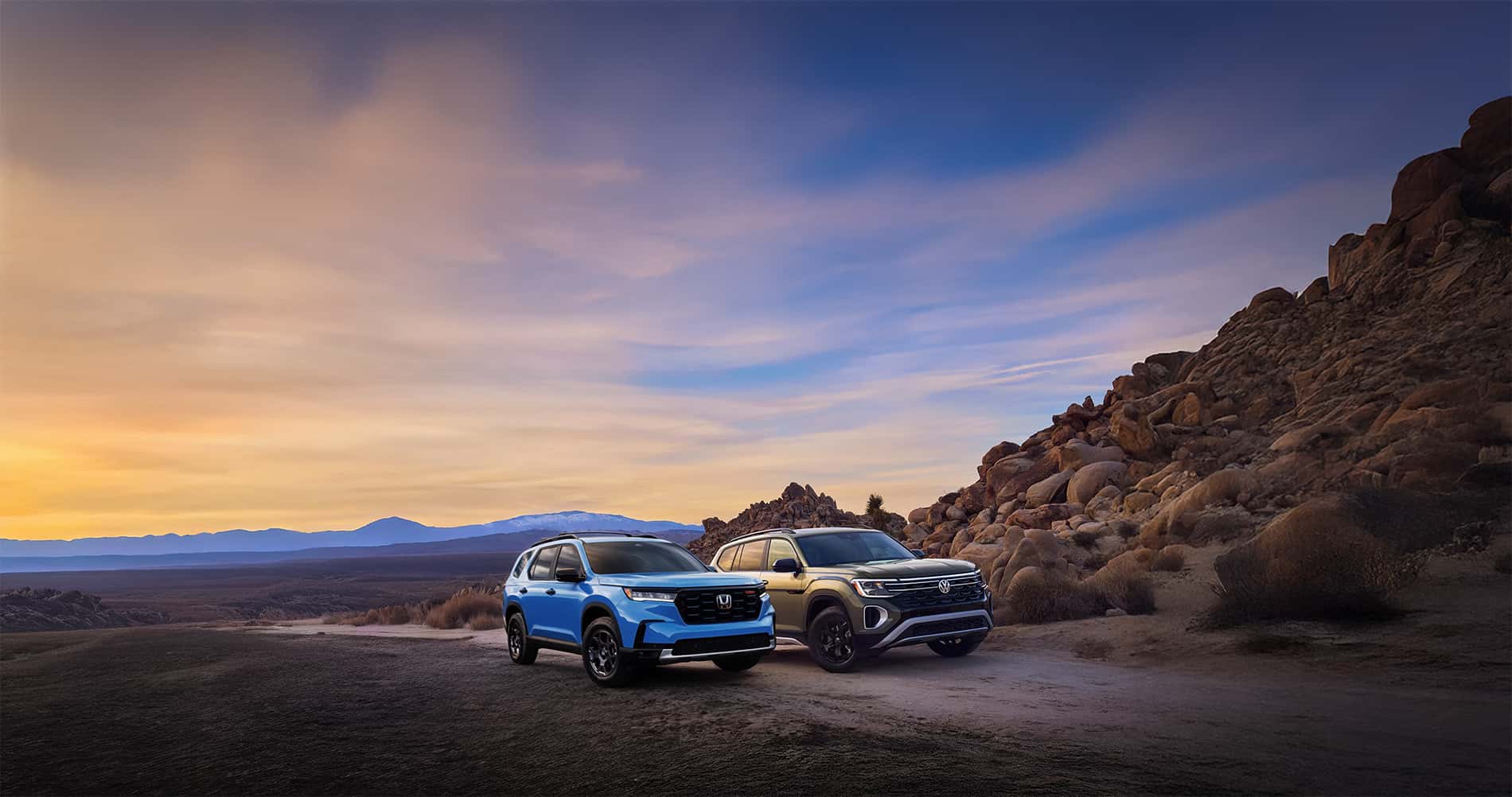
When families in Northern California—from Elk Grove to Sacramento—begin shopping for a three-row SUV, two names often rise to the top of the list: the Volkswagen Atlas and the Honda Pilot. Both models are designed to balance family practicality with modern technology, safety, and performance. Yet, while they share similar goals, their execution differs in ways that matter to real-world drivers.
The Volkswagen Atlas has carved out a reputation for its expansive interior, refined driving dynamics, and European-inspired design. It’s a model that appeals to families who want space without sacrificing sophistication. Meanwhile, the Honda Pilot has long been a staple in the midsize SUV segment, known for its reliability, rugged TrailSport trim, and versatile seating configurations.
In this comparison, we’ll examine how the Volkswagen Atlas vs Honda Pilot stack up across key categories: pricing and market position, dimensions, performance, interior features, and safety. By the end, you’ll see why many families in Folsom and Roseville are drawn to the Atlas as the SUV that blends practicality with premium appeal.
| Model | Starting MSRP* | Trim Range | Overall Appeal |
|---|---|---|---|
| Volkswagen Atlas (2026) | $38,300 | SE, SE w/ Tech, SEL, SEL Premium R-Line | Upscale design, European refinement, strong warranty coverage |
| Honda Pilot (2025) | $40,200 | Sport, EX-L, Touring, TrailSport, Elite, Black Edition | Rugged styling, off-road TrailSport, strong resale value |
The 2026 Volkswagen Atlas undercuts the 2025 Honda Pilot by nearly $2,000 at the entry level. That difference may not seem dramatic, but for families in Elk Grove or Sacramento, it can cover the cost of upgrading to a higher trim or adding desirable features like all-wheel drive.
The Atlas’s pricing strategy positions it as a strong value play in the midsize SUV segment. Even at its base SE trim, buyers get a large 12-inch touchscreen, Volkswagen’s Digital Cockpit, and the full IQ.DRIVE safety suite—features that often require stepping up to higher trims in the Pilot. Combined with Volkswagen’s Carefree Coverage (which includes two years of scheduled maintenance), the Atlas delivers a lower cost of ownership right out of the gate.
The Honda Pilot, starting at $40,200, leans into its reputation for reliability and ruggedness. Its trim walk includes the TrailSport, which appeals to adventurous families who want light off-road capability. Honda also benefits from strong resale value, which helps offset the higher upfront cost.
Still, when comparing Volkswagen Atlas vs Honda Pilot — the Atlas’s lower starting price and richer standard equipment make it the more compelling choice for budget-conscious buyers who don’t want to compromise on technology or safety.
| Specification | Volkswagen Atlas (2026) | Honda Pilot (2025) |
|---|---|---|
| Engine | 2.0L Turbocharged I4 | 3.5L V6 |
| Horsepower | 269 hp | 285 hp |
| Torque | 273 lb‑ft | 262 lb‑ft |
| Towing Capacity | 5,000 lbs | 5,000 lbs |
| City MPG | 20 mpg | 19 mpg |
| Highway MPG | 27 mpg | 27 mpg |
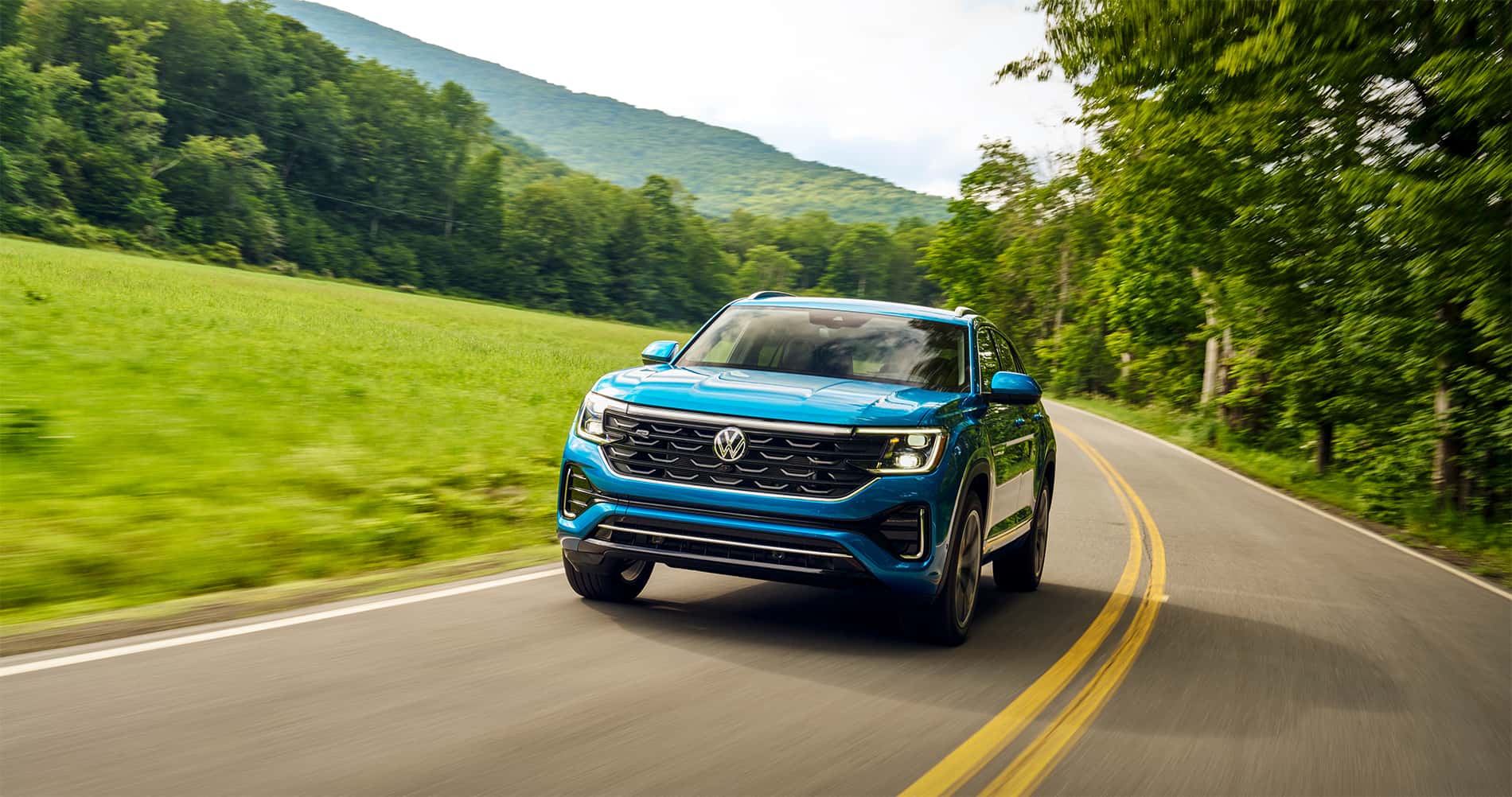
The Honda Pilot’s V6 delivers slightly more horsepower, which looks good on paper. However, the Volkswagen Atlas’s turbocharged four‑cylinder produces more torque at lower RPMs, making it feel stronger in everyday driving. Around Elk Grove or Sacramento traffic, that low‑end torque translates into smoother acceleration when merging or passing.
Both SUVs can tow up to 5,000 pounds*, so either can handle a small boat or camper. Where the Atlas distinguishes itself is refinement: its turbo engine pairs with a smooth automatic transmission that emphasizes quiet, composed acceleration. The Pilot’s V6 is reliable and proven, but it can feel more strained under heavy load.
Fuel efficiency is nearly identical, but the Atlas has a slight edge in city driving. That advantage comes from its turbocharged design, which doesn’t need to rev as high to deliver usable power. For families in Rosemont or Rocklin who spend more time in stop‑and‑go traffic, that efficiency difference can add up over time.
On the highway, both SUVs return 27 mpg, making them competitive in the three‑row SUV class.*
| Specification | Volkswagen Atlas (2026) | Honda Pilot (2025) |
|---|---|---|
| Length | 200.7 in | 199.9 in |
| Width | 78.3 in | 78.5 in |
| Height | 70.4 in | 70.9 in |
| Wheelbase | 117.3 in | 113.8 in |
| Ground Clearance | 6.3 in | 7.3 in |
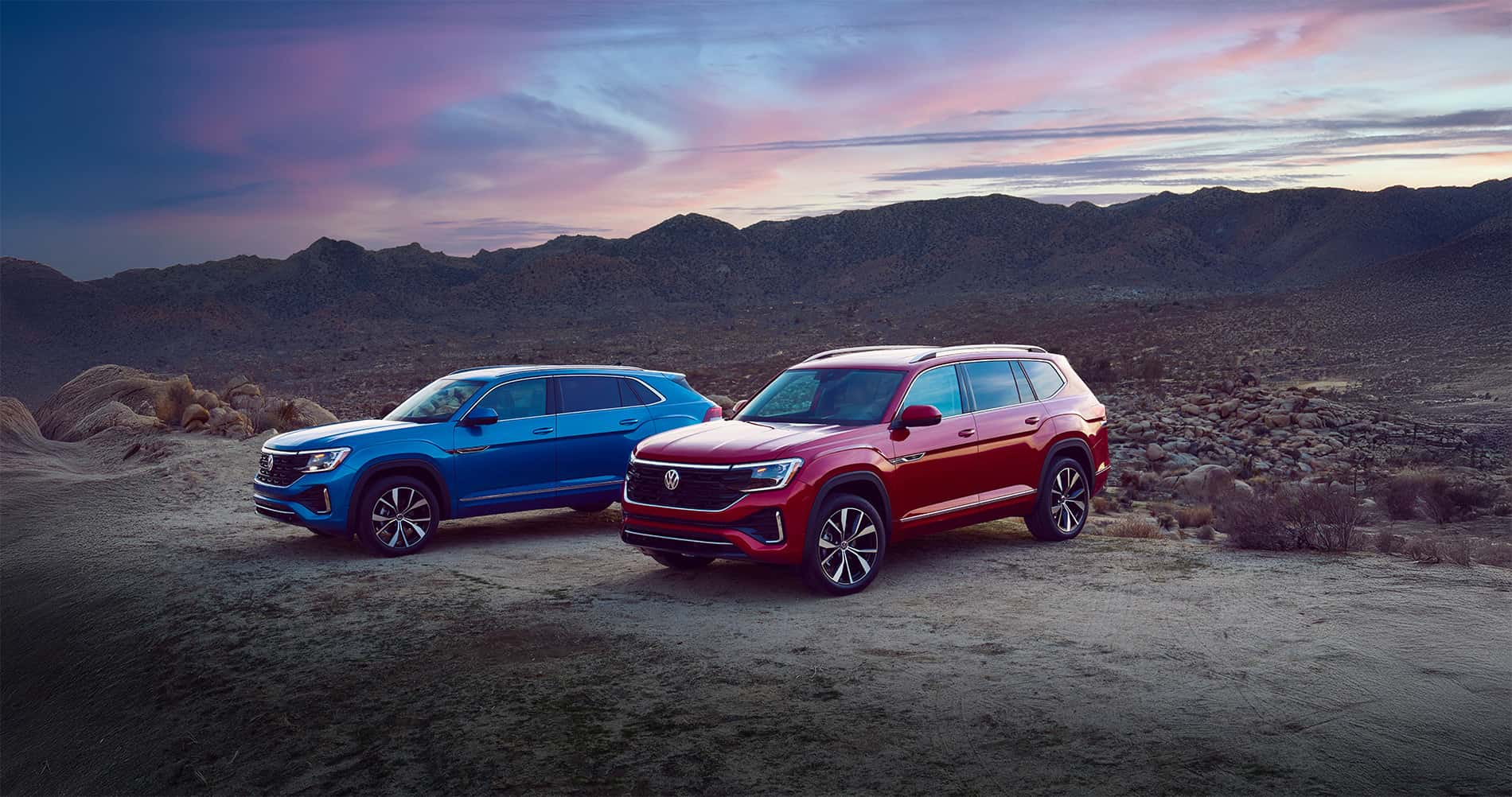
From the outside, the Volkswagen Atlas vs Honda Pilot comparison shows two SUVs with very similar footprints, but subtle differences affect how they feel on the road. The Atlas is slightly longer and rides on a wheelbase nearly four inches greater than the Pilot. That extended wheelbase contributes to a more stable ride at highway speeds and allows Volkswagen to carve out extra space for its third row.
The Pilot, meanwhile, is marginally taller and offers more ground clearance—7.3 inches compared to the Atlas’s 6.3. For families in Folsom or Eldorado Hills who occasionally venture onto gravel roads or light trails, that extra clearance can provide peace of mind. Its slightly wider stance also gives it a rugged, planted look, especially in TrailSport trim.
Overall, the Atlas emphasizes refinement and stability, while the Pilot leans toward versatility and mild off‑road readiness.

| Specification | Volkswagen Atlas (2026) | Honda Pilot (2025) |
|---|---|---|
| Passenger Volume | 154 cu. ft. | 158 cu. ft. |
| Headroom (1st / 2nd / 3rd) | 41.3 / 40.4 / 38.3 in | 40.5 / 40.2 / 39.3 in |
| Legroom (1st / 2nd / 3rd) | 41.7 / 37.6 / 33.7 in | 41.0 / 40.8 / 32.5 in |
| Shoulder Room (1st / 2nd / 3rd) | 61.5 / 60.8 / 54.9 in | 61.9 / 61.7 / 59.5 in |
| Hip Room (1st / 2nd / 3rd) | 58.2 / 58.0 / 45.1 in | 58.4 / 57.4 / 44.6 in |
| Cargo Volume (Behind 3rd / 2nd / 1st Row) | 20.6 / 55.5 / 96.8 cu. ft. | 18.6 / 48.5 / 87.0 cu. ft. |
Inside, the Honda Pilot edges out the Atlas in total passenger volume, offering 158 cu. ft. compared to 154. Its second row is especially roomy, with nearly 41 inches of legroom—ideal for families with tall teenagers. The Pilot also provides slightly more headroom in the third row, which can make longer trips more comfortable for kids or smaller adults.
The Volkswagen Atlas, however, makes its case with a more balanced layout. While its second row is a bit tighter, its third row is notably wider, with 54.9 inches of shoulder room compared to the Pilot’s 59.5. This makes the Atlas’s third row more accommodating for adults, not just children. Families in Roseville who regularly use all three rows will find this especially valuable.
Cargo space is another area where the Atlas shines. With 20.6 cu. ft. behind the third row and nearly 97 cu. ft. with all seats folded, it offers one of the most practical load areas in the segment. The Pilot’s maximum of 87 cu. ft. is respectable but falls short. For parents juggling strollers, sports gear, or Costco runs, the Atlas’s flatter load floor and wider opening make daily life easier.
| Specification | Volkswagen Atlas (2026) | Honda Pilot (2025) |
|---|---|---|
| Seating Capacity | 7 passengers | 7–8 passengers |
| Front Seats | Heated & ventilated available, ergonomic cushioning | Heated available, ventilated on higher trims |
| Second Row | Bench or captain’s chairs, sliding/reclining, optional heating | Bench or captain’s chairs, removable middle seat, optional heating |
| Third Row | Adult‑friendly with wide shoulder room | Best for kids/teens, tighter shoulder width |
| Climate Control | Tri‑zone automatic, rear controls, ventilated airflow | Tri‑zone automatic, humidity control, rear controls |
| Premium Touches | Leather seating, ambient lighting, panoramic sunroof, acoustic glass | Leather seating (EX‑L+), panoramic moonroof (TrailSport+), Black Edition styling |
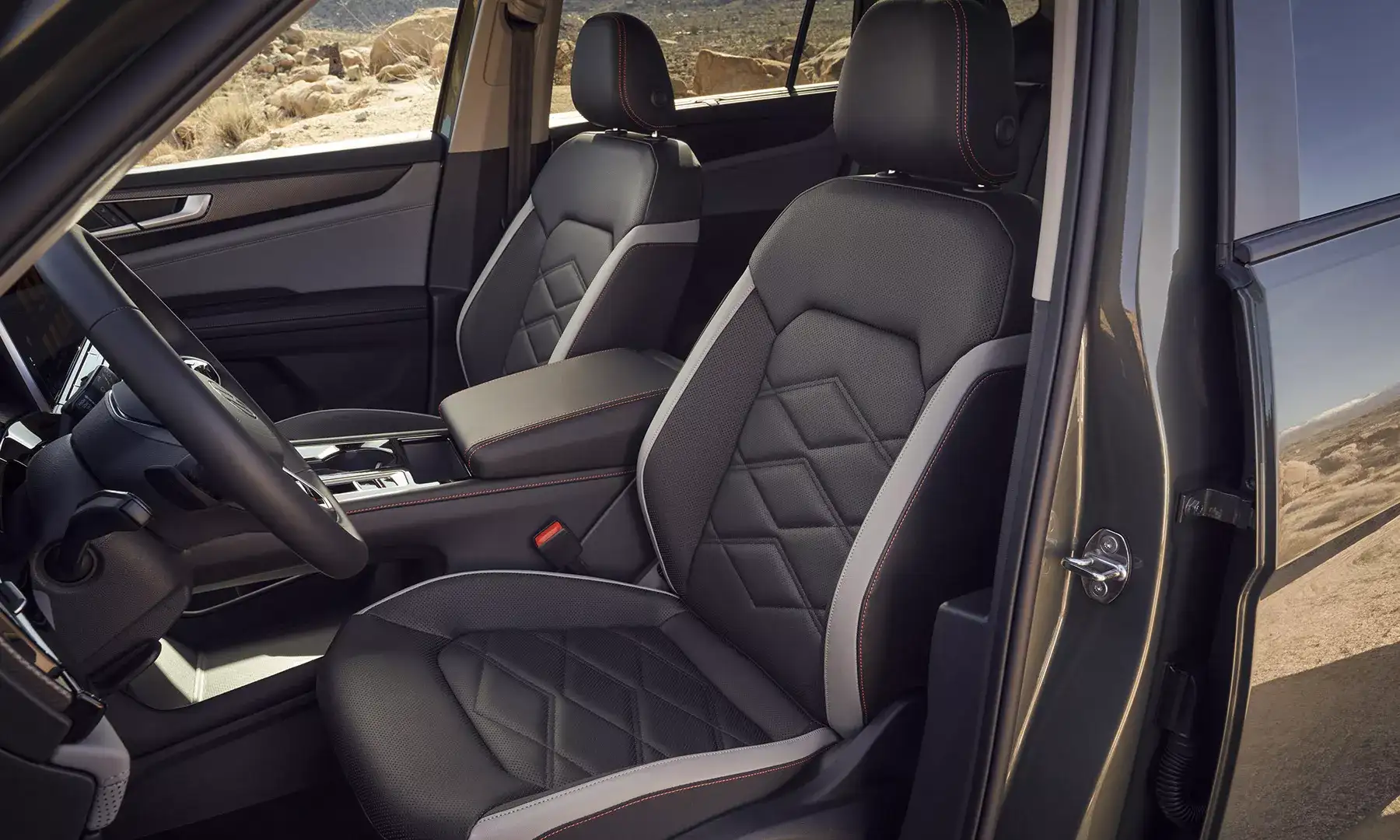
The Volkswagen Atlas has clearly leaned into premium comfort for 2026. Its seats are designed with ergonomic cushioning and available ventilation, making long drives from Elk Grove to Tahoe more pleasant year‑round. The second row slides and reclines, with optional heating, while the third row is unusually adult‑friendly thanks to generous shoulder width and legroom. Volkswagen also upgraded cabin insulation with acoustic glass and sound‑dampening materials, so conversations and music remain clear even at highway speeds.
The Honda Pilot emphasizes versatility. Its A removable second‑row middle seat is a clever feature, allowing quick conversion between captain’s chairs and a bench. Families in Sacramento who frequently juggle carpools will appreciate that flexibility. Higher trims add ventilated seating and a panoramic moonroof, while the Black Edition introduces unique leather with crimson stitching for a sportier vibe.
Both SUVs feature tri‑zone climate control, but the Atlas adds refinements like a panoramic sunroof with power sunshade and customizable ambient lighting, creating a more upscale atmosphere. The Pilot’s climate system includes humidity control, which is a thoughtful touch for comfort in varying weather.
Storage and usability also play a role in comfort. The Atlas integrates multiple storage compartments, grocery bag hooks, and a low cargo floor for easy loading A. The Pilot counters with large cupholders, in‑floor storage, and a wide center console that can fit a purse or tablet.
In practice, the Pilot feels rugged and family‑ready, while the Atlas delivers a quieter, more refined environment that leans toward premium SUV territory.
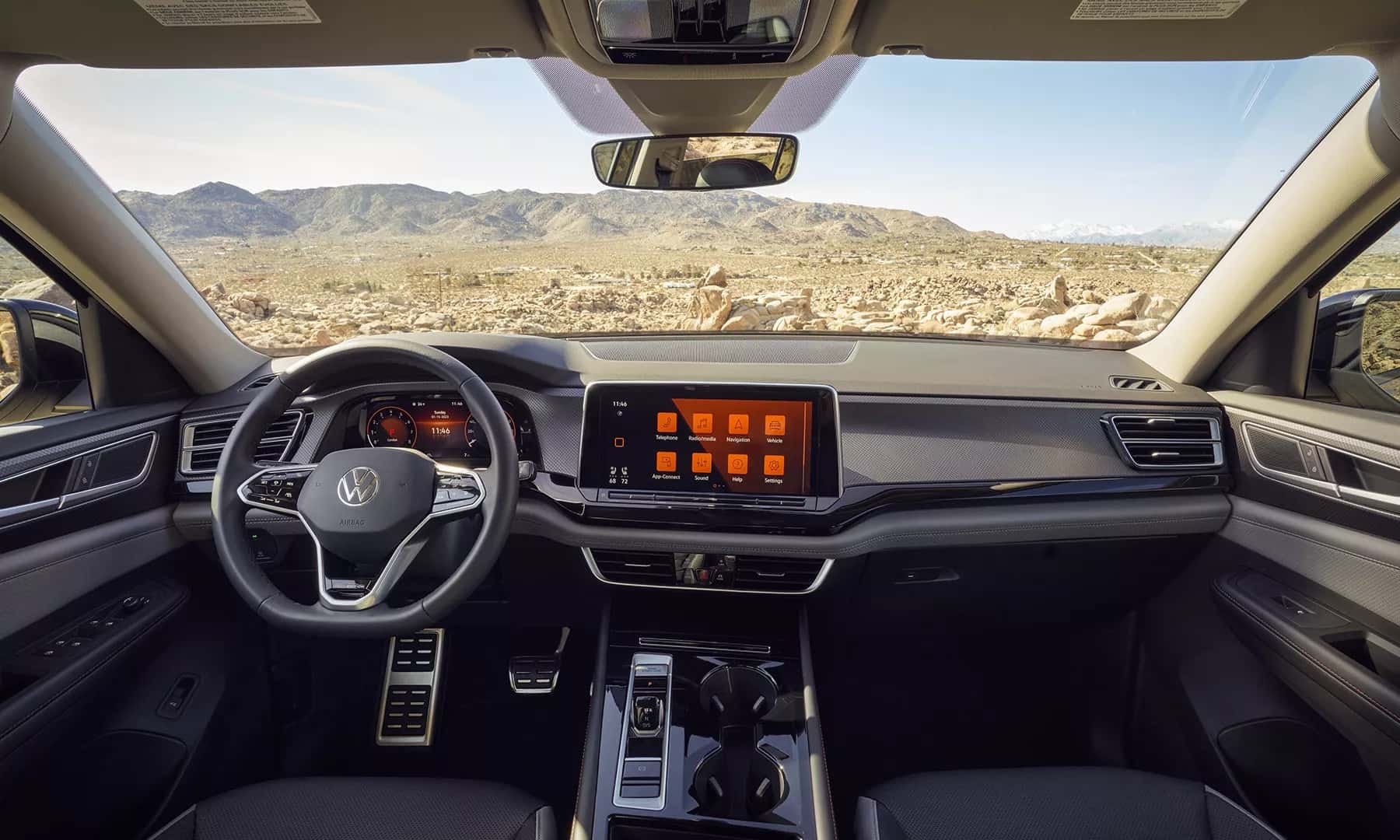
| Feature | Volkswagen Atlas (2026) | Honda Pilot (2025) |
|---|---|---|
| Touchscreen | 12-inch standard across trims | 7-inch (Sport) or 9-inch (EX-L and above) |
| Driver Display | 10.3-inch Digital Cockpit Pro (fully digital) | 7-inch (Sport) or 10.2-inch (Elite/Black Edition) |
| Smartphone Integration | Wireless Apple CarPlay & Android Auto | Wired (Sport) / Wireless (all other trims) |
| Audio Systems | Standard 6-speaker; Harman Kardon premium on SEL Premium R-Line | 7-speaker (Sport), 9-speaker (EX-L/TrailSport), Bose 12-speaker (Touring/Elite/Black Edition) |
| Charging & Connectivity | Wireless charging pad, 6 USB-C ports, Wi-Fi hotspot, remote start | Wireless charging (EX-L+), multiple USB-A & USB-C ports, Wi-Fi hotspot (Touring+) |
| Unique Features | Ambient lighting, head-up display, 360° camera, massaging front seats (SEL Premium R-Line) | CabinTalk PA system, Honda Satellite-Linked Navigation, multi-zone audio, head-up display (Elite/Black Edition) |
The Volkswagen Atlas sets a high bar by making its 12-inch touchscreen and fully digital cockpit standard across the lineup. This means even entry-level trims feel premium, with crisp graphics and customizable layouts. Wireless Apple CarPlay and Android Auto are included, along with six USB-C ports and a wireless charging pad—ideal for families juggling multiple devices. Higher trims add luxury touches like a Harman Kardon audio system, customizable ambient lighting, and even massaging front seats on the SEL Premium R-Line. For tech-savvy buyers in Sacramento or Roseville, the Atlas feels like a luxury SUV without the luxury badge.
The Honda Pilot takes a more tiered approach. Base Sport trims get a 7-inch screen with wired smartphone integration, while EX-L and above upgrade to a 9-inch screen with wireless CarPlay/Android Auto. Touring and Elite trims add a Bose 12-speaker system, which delivers excellent sound quality. Honda also offers family-friendly innovations like CabinTalk, an in-car PA system that lets the driver’s voice project through the rear speakers or headphones—perfect for parents trying to get kids’ attention in the third row.
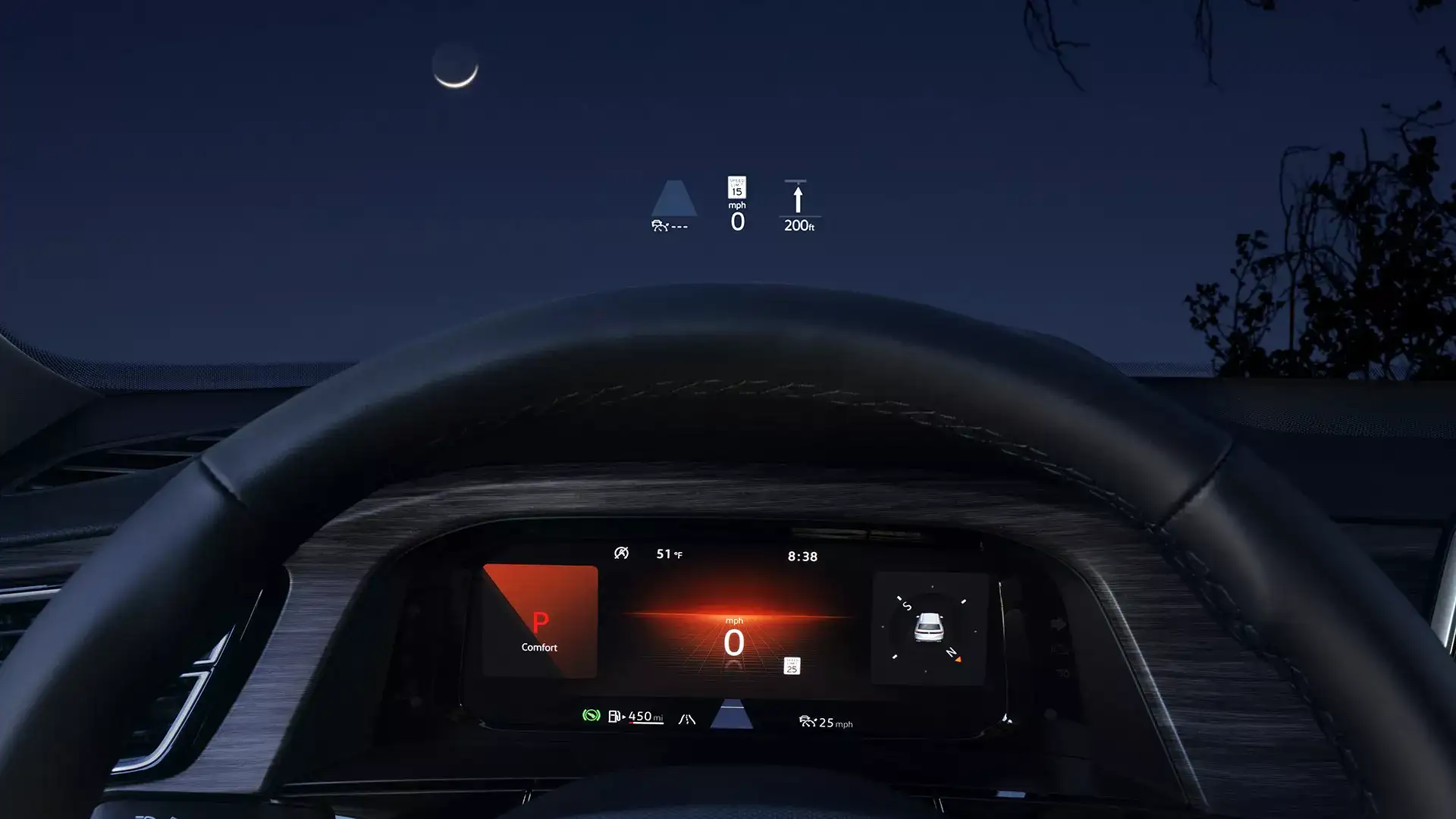
Both SUVs offer Wi-Fi hotspots and wireless charging, but the Atlas leans into premium convenience, while the Pilot emphasizes family usability. For example, the Pilot’s multi-zone audio lets rear passengers listen to different media through headphones, while the Atlas focuses on upscale features like a head-up display and 360° camera for easier navigation and parking.
In short, the Pilot’s tech is practical and family-oriented, while the Atlas delivers a more polished, high-tech experience that feels a step above in everyday use.
| Specification | Volkswagen Atlas (2026) | Honda Pilot (2025) |
|---|---|---|
| Core Safety Suite | IQ.DRIVE (adaptive cruise, lane keep, blind spot, front assist) | Honda Sensing (adaptive cruise, lane keep, collision mitigation, road departure) |
| Crash Ratings | Expected 5‑Star NHTSA | 5‑Star NHTSA, IIHS Top Safety Pick+ |
| Parking Assistance | Park Assist Plus (auto steering) | Multi‑angle rearview camera |
| Advanced Features | Head‑Up Display, Traffic Jam Assist, 360° camera | Head‑Up Display, Low‑Speed Braking Control |
Both SUVs come standard with robust safety suites. The Pilot’s Honda Sensing has a long track record, while the Atlas’s IQ.DRIVE integrates semi‑automated features like Travel Assist for smoother highway driving.
The Atlas leans into convenience with features like Park Assist Plus and a 360° camera, making tight parking in Sacramento far less stressful. The Pilot offers a head‑up display and low‑speed braking control, which are useful in urban settings.
Both SUVs deliver excellent safety, but Volkswagen’s semi‑automated driving aids give it an edge for long‑distance commuters.
At Elk Grove Volkswagen, we understand that choosing between the Volkswagen Atlas vs Honda Pilot comes down to balancing value, comfort, and long‑term satisfaction. The Pilot remains a capable, reliable SUV with a well‑earned reputation, but the Atlas delivers a unique blend of premium design, expansive passenger comfort, and advanced technology—all while starting at a lower price point.
With a base MSRP* of $38,300, the Atlas undercuts the Pilot’s $40,200 entry price, giving families in Elk Grove, Sacramento, and beyond more SUV for their money. Even at its starting trim, the Atlas includes features like a 12‑inch touchscreen, Digital Cockpit Pro, and the full IQ.DRIVE safety suite—equipment that often requires stepping up in the Pilot lineup. Add in Volkswagen’s Carefree Coverage, which includes two years of scheduled maintenance, and the Atlas becomes not only the more refined choice but also the smarter financial one.
Whether you’re commuting from Folsom, loading up for a weekend in Eldorado Hills, or navigating the busy streets of Roseville, the Atlas is designed to make every journey easier and more enjoyable.
We invite you to visit Elk Grove Volkswagen to experience the Atlas firsthand. Our team is here to walk you through trims, features, and options so you can see why so many Northern California families are choosing Atlas as their next SUV.
DISCLAIMERS:
* MSRP excludes destination, taxes, title, other options, and dealer charges and fees. Dealer sets actual price.
* EPA-estimated fuel economy for 2025 models equipped with front-wheel drive is 20/26/22 mpg (city/hwy/combined). For models equipped with the 4Motion all-wheel-drive system, the EPA-estimated fuel economy is 19/26/21 for SE and SE with Technology models, 18/25/21 for SEL and SEL Premium R-Line models, and 18/25/20 for Atlas Peak Edition models.
* Maximum tow rating when properly equipped with towing accessories. Vehicle load, other accessories and options may reduce maximum towing capacity. See vehicle owner’s manual for details.


